Objeq Delay 2 – Advanced Resonator Delay Plugin
The deal
$79 at ADSR Sounds (down from $99, 20% off). No coupon needed — the discount is applied automatically.
What it is
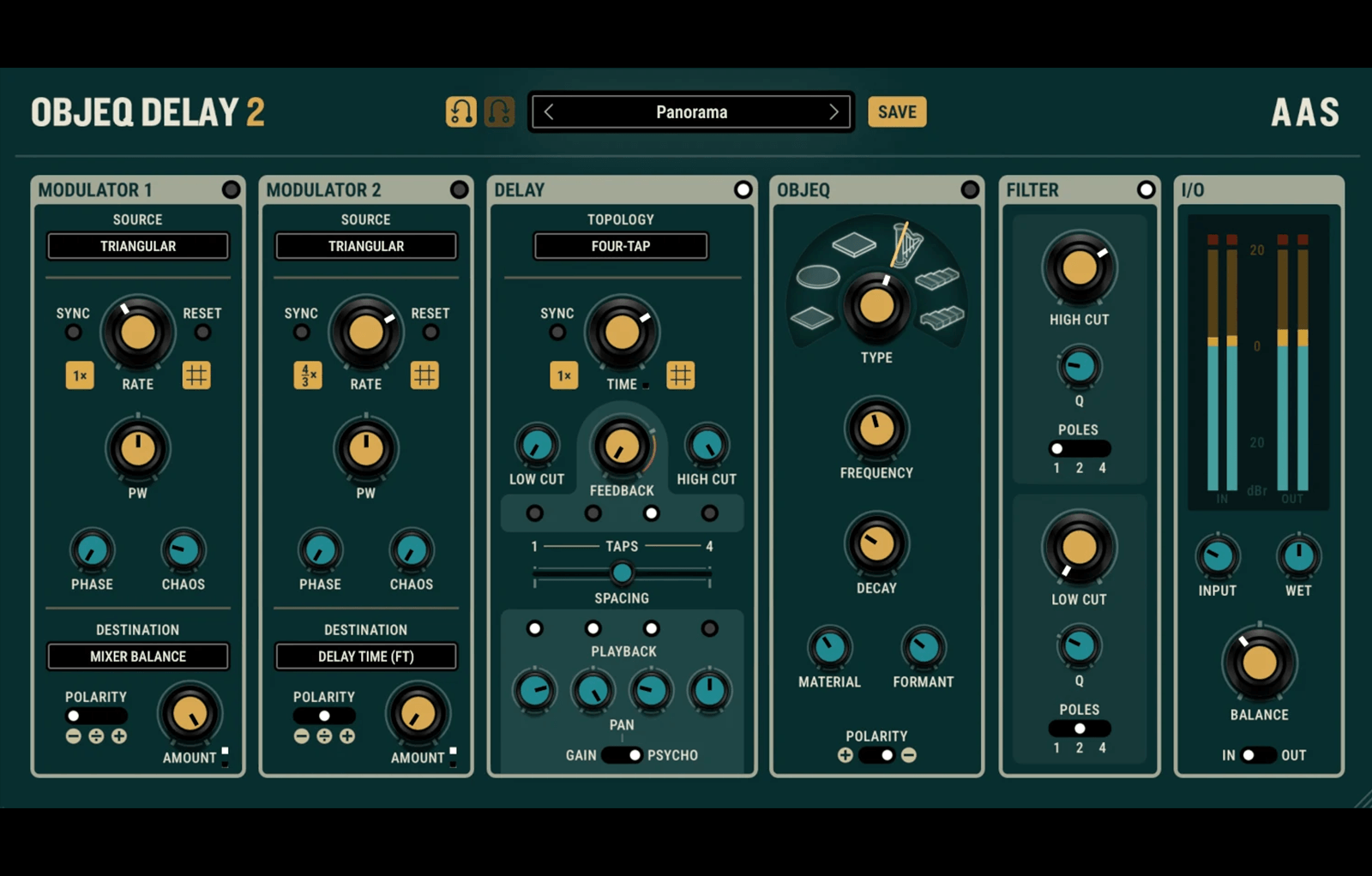
Objeq Delay 2 is a creative delay plugin from Applied Acoustics Systems that combines physical modeling resonators with a multimode delay engine. The resonator section models five acoustic object types — membranes, plates, strings, beams, and marimbas — and lets you morph continuously between them. The delay section offers four configurations (one-tap, two-tap, four-tap, and split), each fully tempo-syncable with independent feedback, spacing, and stereo panning controls. On top of the core signal path are two assignable modulators drawing from a pool of sources including LFOs, chaos generators, envelope followers, RMS detectors, pitch trackers, and quantizers — which can be routed to resonator morphing, delay parameters, and more.
Who it is for
Producers working in ambient, electronic, experimental, and cinematic music who want delay that does more than repeat. The resonator layer transforms the character of each echo, so a single repeating hit becomes a pitched ringing texture rather than a clean ghost. Particularly useful on synths, percussion, and loops where you want evolving spatial effects rather than a straight rhythmic delay.
Key features
- Five morphable resonator types (membrane, plate, string, beam, marimba) with adjustable material, frequency, and decay
- Multimode delay engine with four tap configurations, fully tempo-syncable
- Two assignable modulators with LFO, chaos, envelope follower, RMS, pitch tracking, and quantizer sources
- Available as VST, VST3, AU, and AAX on Mac and Windows
FAQ
What plugin formats does Objeq Delay 2 support?
VST, VST3, AU, and AAX. It runs on both macOS and Windows.
What types of resonators are included?
Five physical modeling resonator types: membrane, plate, string, beam, and marimba. You can morph continuously between them within a patch.
Does the delay sync to tempo?
Yes. All four delay configurations (one-tap, two-tap, four-tap, and split) are fully tempo-syncable.
What modulation sources are available?
Two assignable modulators drawing from: LFOs, chaos generators, envelope followers, RMS detectors, pitch trackers, and quantizers.