
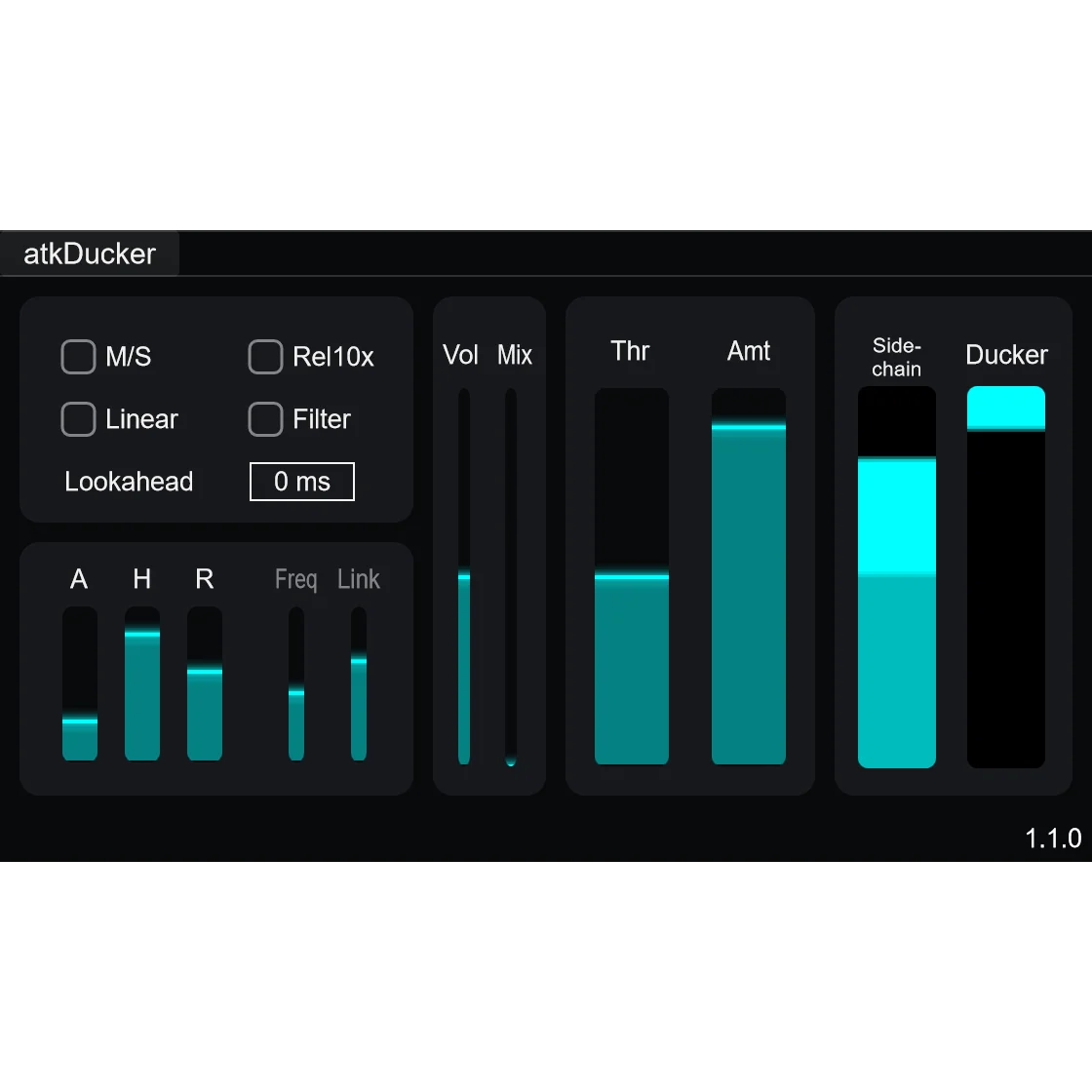
atkDucker
Key Features
- Sidechain-triggered ducking lowers a background source when speech, dialogue, or another priority signal is present
- Threshold, amount, attack, hold, and release controls shape how strongly and how smoothly the reduction happens
- Lookahead can be set from 0 to 5000 ms for pre-ducking before the priority source fully arrives
- Mid/side center mode focuses attenuation on centered material while retaining more stereo ambience
- High-shelf filter mode ducks upper frequencies when full-band level reduction would be too heavy-handed
- Mix sidechain to output option supports monitoring and routing checks while setting up the sidechain
Description
atkDucker is a sidechain ducking plugin from atkAudio built for automatically lowering background material when speech or another priority source appears. It targets the practical jobs where a normal compressor can feel too broad: music under dialogue, game audio under commentary, announcements over backing tracks, and live or post-production voice workflows.
The main control set covers threshold, amount, attack, hold, and release, so the ducking envelope can be shaped from quick talk-over dips to slower broadcast-style fades. The official documentation also lists lookahead from 0 to 5000 ms, which helps the reduction begin before the voice arrives when intelligibility matters.
atkDucker goes beyond simple full-band level reduction with a mid/side center mode and a high-shelf filter mode. Center-focused ducking can clear dialogue while preserving more side ambience, while the filter mode can reduce high-frequency content without pulling down the whole backing track.
The official page lists atkDucker as a USD 0.00 product and links to a public GitHub release ZIP. Version 1.1.0 includes macOS, Windows, and Linux builds in one archive, with the product page and documentation describing VST3 and AU plugin formats.
Frequently Asked Questions
What is atkDucker mainly designed to do?
atkDucker reduces a main or background signal when a sidechain source is present. The common use case is lowering music, game audio, or ambience when a voice, announcement, or dialogue track needs to stay clear.
How is atkDucker different from using a basic compressor for ducking?
It is built specifically around ducking workflows rather than general dynamics control. The dedicated amount, hold, long lookahead, mid/side, and filter options give more direct control over voice-over and broadcast-style attenuation.
What does the mid/side center mode help with?
Mid/side mode can focus the ducking on centered content, where speech and many lead elements often sit. That can make room for a voice while preserving more width and ambience from the sides.
Why would you use the high-shelf filter mode?
High-shelf ducking is useful when brightness or intelligibility conflicts are the problem, but lowering the entire backing track would sound too obvious. It lets the plugin reduce high-frequency content around the voice while leaving more of the low and mid body intact.


