COGG
Key Features
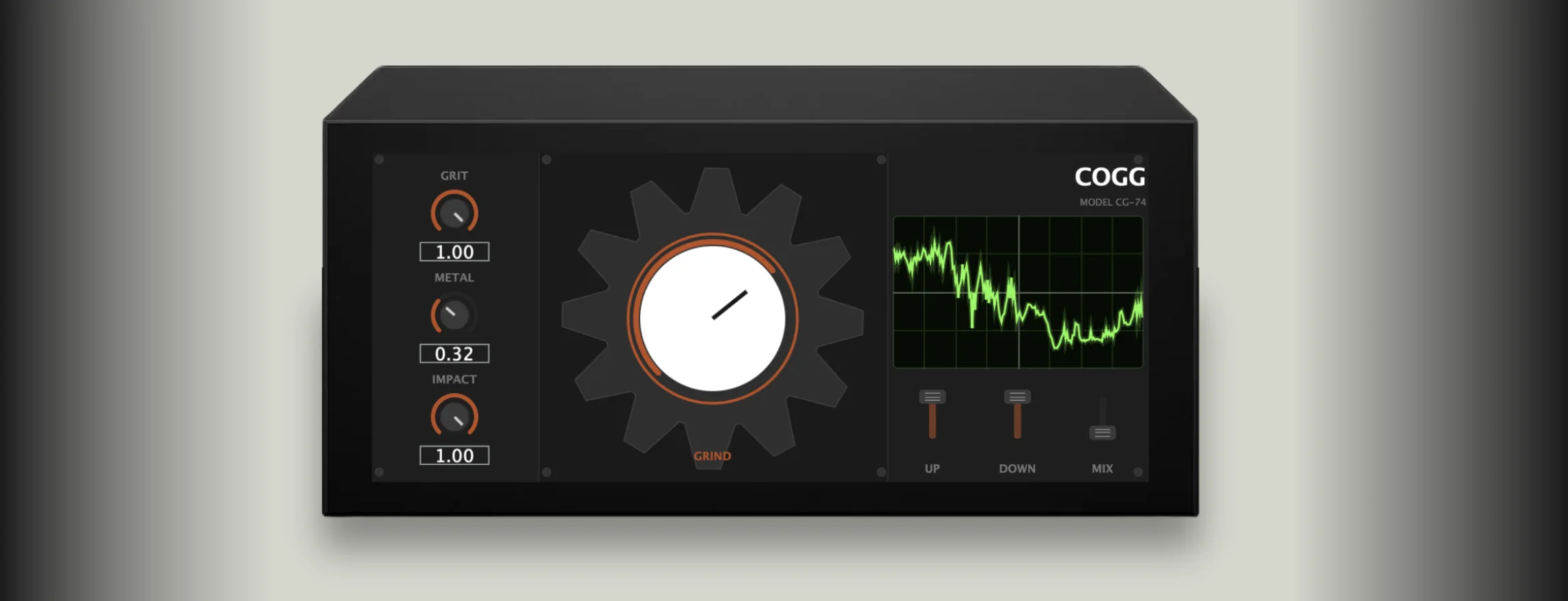
- Central Grind macro drives the overall corrosion and makes the animated cog spin harder as the sound breaks up
- Impact control adds a sharp metallic transient before the effect decays into the processed tail
- Metal stage uses a synthetic metal-plate convolution response for resonant industrial space
- Grit control folds in harmonic excitement for rougher texture and extra edge
- Up and Down controls layer pitch-shifted voices above and below the dry signal for dissonant movement
- Eight version 1.1.1 presets cover subtle rust, heavy punch, metallic shimmer, cave-like ambience, shrapnel chaos, and meltdown saturation
- Rotating gear interface and live CRT-style oscilloscope give immediate visual feedback while shaping the effect
Description
COGG is an industrial destruction effect from Plasmatic built for turning clean sounds into metallic, damaged textures. Its processing chain combines harmonic grit, synthetic metal-plate convolution, pitch layering, and a central Grind macro that pushes the whole effect from rough coloration into full audio damage.
The workflow is deliberately fast: turn the main cog for broad intensity, then use Impact, Metal, Grit, Up, Down, and Mix to shape the attack, resonance, harmonic edge, pitch smear, and dry/wet balance. Version 1.1.1 also includes eight presets, giving producers starting points for crushed drums, screamo-style vocals, metallic shimmer, dark reverberant space, and heavier chaos patches.
COGG is strongest when the sound should feel physical, corroded, and uncomfortable in a useful way. It can add raw bite to drum loops, make synth pads feel cinematic and hostile, roughen basses without building a long effects chain, or push vocals toward aggressive industrial texture.
Because the effect includes both convolution and pitch-shifted layers, it is more than a standard distortion box. Use it when a source needs metallic space, dissonant movement, and destructive character rather than clean saturation or subtle mix polish.
Video Preview


Frequently Asked Questions
What makes COGG different from a normal distortion plugin?
COGG combines distortion with a synthetic metal-plate convolution stage and pitch-layering controls. That makes it better suited to metallic sound design, industrial ambience, and destructive movement than a simple clipping or saturation effect.
What sources work well with COGG?
The developer demonstrates it on synth pads, bass, leads, banjo, drum loops, and vocals. In practice it is most useful on sources that can handle obvious coloration, such as drum loops, basses, transitions, cinematic pads, and aggressive vocal layers.
Does COGG include presets?
Yes. Version 1.1.1 includes eight presets, ranging from lighter metallic texture through dark reverberant space and maximum-damage settings like Shrapnel and Meltdown.
Why might COGG need an extra installation step on macOS?
The official page notes that macOS may mark the plugin as quarantined. Plasmatic provides xattr commands for the VST3 and AU builds so users can remove the quarantine flag after moving the plugin into the correct folder.