

Key Features
- Drive the fuzz circuit with an input gain control.
- Move between overdrive, distortion and full fuzz with one control.
- Shape the sound with linked low-pass and high-pass filters.
- Adjust output level for gain staging.
- Add harmonics to bass, synths, drums or vocals.
- Resize the interface and enter precise control values.
Description
Fuzzploid is a fuzz and distortion effect from Shameless Plugs, designed to bring a brash edge to guitar, bass and other audio. Its original algorithm was developed for its sound rather than modeled on a particular hardware pedal.
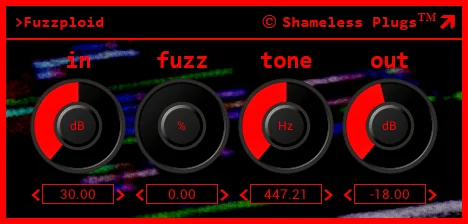
Four controls cover the signal path: input gain drives the effect, Fuzz moves between overdrive or distortion and full fuzz, Tone shifts low-pass and high-pass filters together, and output sets the resulting level. The input can push up to 60 dB into the distortion circuitry, giving the effect plenty of room to get aggressive.
Put it before an amp simulator for a familiar guitar-pedal chain, or experiment with feeding a cabinet simulator directly. On bass guitar or bass synth, the developer suggests reducing input gain and favoring distortion over fuzz to add audible harmonics while shaping the tone.
The effect can also process drums, synths and vocals when a track needs extra grit. There is no dedicated dry/wet mix control, so parallel blending must be handled elsewhere in the host if needed.
The resizable interface supports fine mouse adjustments with modifier keys and direct value entry. Fuzzploid is available for 64-bit Windows; check that your host supports the listed VST3 format before adding it to a session.
Frequently Asked Questions
Is Fuzzploid modeled on a specific pedal?
No. Shameless Plugs says its algorithm is an original design rather than a model of a particular hardware circuit.
Can Fuzzploid process sources other than guitar?
Yes. The developer suggests trying it on bass, synths, vocals and drums as well as guitar.
Does Fuzzploid have a dry/wet control?
It has no dedicated dry/wet mix control. Use a parallel channel or your host’s own blending controls if you need to mix in an unaffected signal.
Where can I place Fuzzploid in a guitar chain?
Try it before an amp simulator, as you would a fuzz pedal. The developer also suggests experimenting with a cabinet simulator directly after it.


