
Key Features
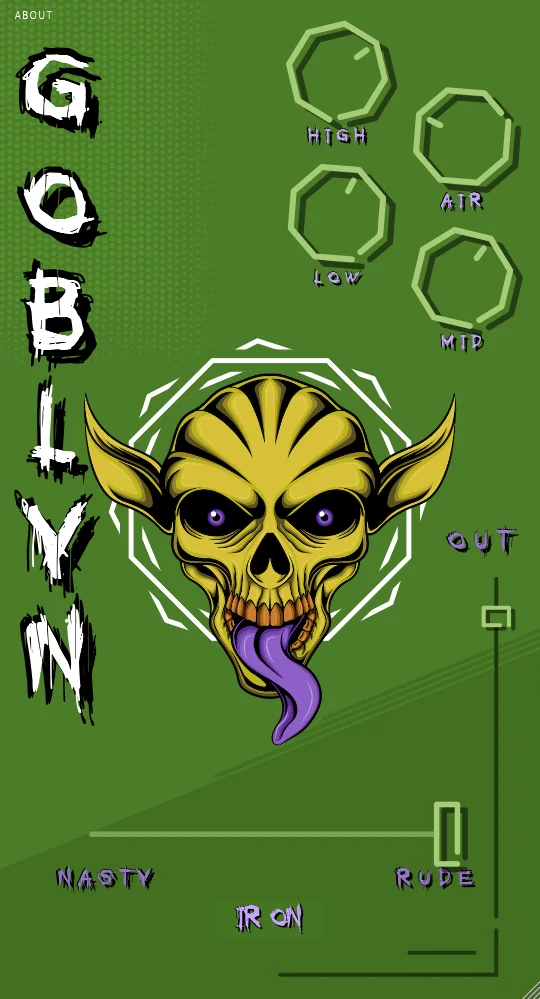
- High-gain guitar amp with a boosted front end
- Three-band tone stack for shaping the amp voice
- Nastiness control for pushing the sound into more aggressive territory
- Two custom Aurora cabinet impulse responses
- IR slider to blend the included cabinet responses
- Load an external impulse response for a different cabinet sound
Description
Goblyn is Aurora DSP’s high-gain guitar amp simulator for players who want an aggressive metal tone with a compact set of controls. Its boosted amp sound and cabinet section put the essentials for tracking heavy guitar parts in one plugin.
The three-band tone stack shapes the amp voice, while the Nastiness control pushes its character toward a more aggressive sound. That focused layout is useful when you want to adjust a riff quickly without navigating a large collection of amp models and effects.
Two custom Aurora cabinet impulse responses are included, and an IR slider lets you blend them. You can also load your own impulse response to change the cabinet character for a particular guitar or mix.
Goblyn runs on Windows, macOS and Linux in the formats listed by Aurora DSP, with a standalone application where supplied. Linux users get VST3, LV2, CLAP and standalone builds; the available formats vary by operating system.
The desktop license is free for life, but claiming it and accessing the installers requires an Aurora DSP account. An internet connection is also required for initial license activation, so plan for that step before setting up an offline recording computer.
Video Preview

Frequently Asked Questions
Is Goblyn permanently free?
Aurora DSP describes the desktop license as free for life. You need an Aurora DSP account to claim it and access the installers.
Can I use my own cabinet impulse responses?
Yes. Goblyn includes two custom Aurora responses and an IR loader for external impulse responses.
Which operating systems and plugin formats are supported?
Aurora DSP lists Windows, macOS and Linux builds. Windows supports VST3 and AAX, macOS supports AU, VST3 and AAX, and Linux supports VST3, LV2 and CLAP; standalone availability varies by platform.


