
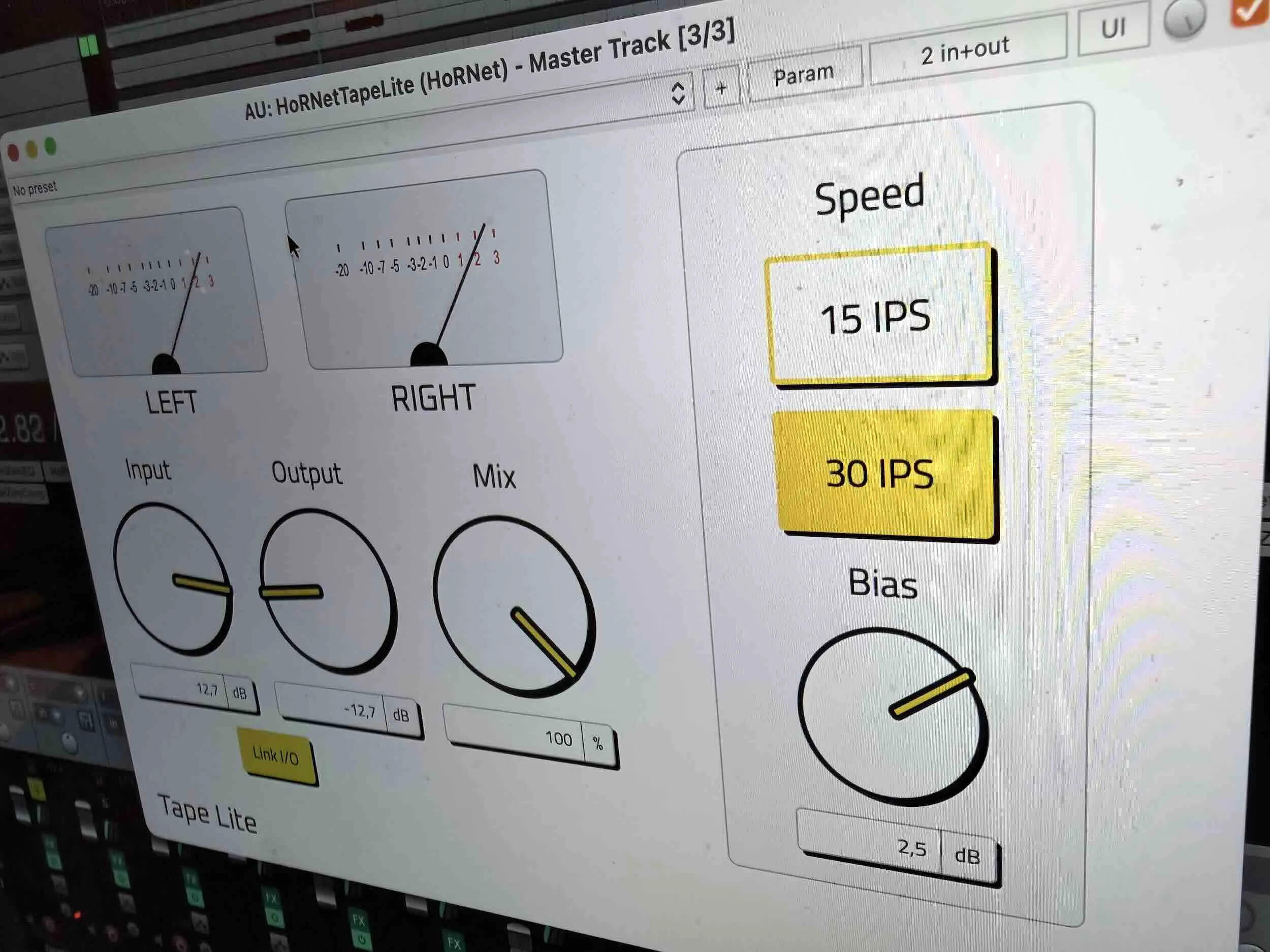
HoRNet TapeLite
Key Features
- Otari MX80-inspired tape machine model adds harmonic saturation, soft compression, and tape-style tonal movement to clean digital tracks.
- Two tape speed modes let you choose between 15 IPS weight and head bump or 30 IPS clarity and tighter low-end response.
- Input and Output controls make drive staging straightforward, so saturation amount and playback level can be balanced by ear.
- Bias control changes the tape magnetization character, smoothing or darkening the high end while shifting the distortion texture.
- Dry/wet Mix control supports parallel tape processing for adding body without flattening transients.
- Fixed 4x oversampling and 64-bit internal precision keep the saturation cleaner across buses, inserts, and mastering chains.
- No copy protection or iLok requirement, with downloads managed through a free HoRNet account.
Description
HoRNet TapeLite is a streamlined tape saturation plugin for macOS and Windows, built around HoRNet's analog tape modeling engine from Tape MK2. The official page positions it as a one-machine tape processor based on the Otari MX80, adding harmonic saturation, subtle compression, and frequency-response bumps to digital tracks.
The workflow stays deliberately simple: Input and Output handle gain staging, Speed switches the model between 15 IPS and 30 IPS, Bias changes the magnetization behavior, and Mix blends the processed tone with the dry signal. Fixed 4x oversampling keeps the saturation cleaner, while the limited control set makes it practical to place across several tracks instead of reserving it only for a bus.
The 15 IPS mode is the warmer option, with more low-end weight, stronger head-bump behavior, and earlier saturation for drums, bass, guitars, and lo-fi textures. The 30 IPS mode keeps the bottom end tighter and the top end more open, which suits vocals, acoustic instruments, modern rock mixes, and subtle master-bus polish.
As checked on April 29, 2026, TapeLite is still free. HoRNet labels it 100% free, says there is no trial period or hidden cost, states that it will remain free forever, and uses a free-account checkout flow rather than a direct public installer link.
Video Preview

Frequently Asked Questions
What tape machine is HoRNet TapeLite based on?
HoRNet says TapeLite is based on the Otari MX80, a professional multitrack tape machine from the late analog era. The plugin focuses on one deck rather than offering a menu of different tape machines.
What is the difference between the 15 IPS and 30 IPS modes?
The 15 IPS mode is warmer and fuller, with more low-end head bump and earlier saturation. The 30 IPS mode is brighter and tighter, making it better for vocals, acoustic instruments, master-bus sheen, and mixes where clarity matters.
How does TapeLite compare with HoRNet Tape MK2?
TapeLite uses the same core tape-modeling engine but limits the workflow to one classic deck, two tape speeds, fixed 4x oversampling, and manual gain control. Tape MK2 expands that concept with five tape deck models, adjustable oversampling up to 8x, and auto gain.
Does HoRNet TapeLite add tape hiss or require iLok?
HoRNet says TapeLite models saturation rather than hiss by default, aiming for tape character without added noise. The official page also states that there is no iLok and no copy protection.


