JS80P
Key Features
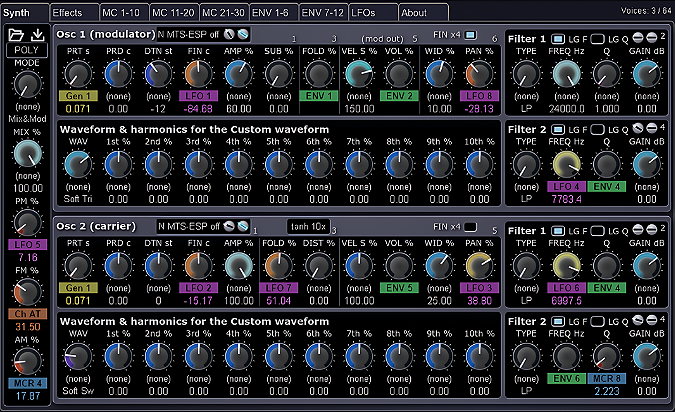
- Two oscillators with 14 waveforms including four new pulse variants with pulse width modulation, sub-harmonic sine, and 64-note polyphony across subtractive, additive, FM, PM, AM, and PWM synthesis
- Now available on macOS (Apple Silicon and Intel), Windows, and Linux with VST3 and FST (VST 2.4) formats in both AVX-optimized and SSE2 builds
- Full MIDI Polyphonic Expression support with per-note pitch bend, pressure, and timbre control for expressive performance with MPE controllers
- Seven filter types per oscillator with logarithmic or linear cutoff scaling, plus analog imperfection emulation for oscillator pitch instability and filter drift
- 12 DAHDSR envelopes and 8 polyphonic LFOs with tempo sync, combined with 30 freely assignable macros featuring non-linear curve shaping for deep MIDI controller mapping
- Built-in effects chain: tape simulation (wow, flutter, hiss, saturation), multi-voice chorus, stereo echo with sidechain compression, stereo reverb, and expanded distortion types including sin(x) and sqrt(x) waveshaping
- Resizable GUI with over 55 factory presets spanning cinematic pads, brass, acid leads, chiptune, and ambient textures, plus MTS-ESP microtuning support
Description
JS80P is a MIDI-driven, performance-oriented synthesizer inspired by the Yamaha CS-80, developed by Attila Magyar as an open-source project. Version 4.0.0 brings macOS support for the first time alongside Windows and Linux.
This major update also introduces four new pulse waveforms with pulse width modulation, expanding the engine to 14 waveforms total. Subtractive, additive, FM, PM, AM, and PWM synthesis combine with 64-note polyphony and full MIDI Polyphonic Expression support for deeply expressive performance.
Seven filter types per oscillator handle everything from smooth low-pass sweeps to surgical bell curves, while 12 DAHDSR envelopes and 8 LFOs with amplitude envelopes drive intricate modulation routing. Thirty freely assignable macros with non-linear curve shaping give granular control over every parameter through MIDI controllers.
The built-in effects chain includes tape simulation with wow, flutter, and saturation, a multi-voice chorus, stereo echo with sidechain compression, and stereo reverb from tight rooms to cathedrals. Version 4.0.0 also adds new distortion types including sin(x) and sqrt(x) waveshaping, a resizable GUI, and improved VST 3 event processing consistency.
Over 55 factory presets demonstrate the range from lush cinematic pads and brass to chiptune leads and acid textures. JS80P ships as VST3 and FST (VST 2.4 compatible) with both AVX-optimized and SSE2 builds, plus MTS-ESP microtuning support for alternative tuning systems.
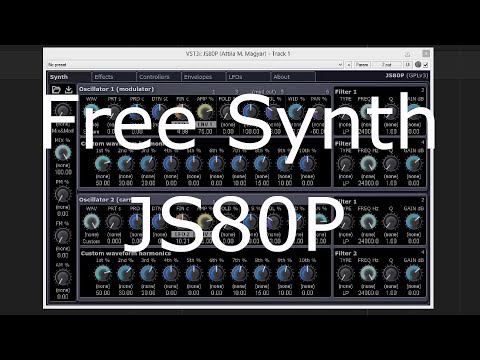
Video Preview

Frequently Asked Questions
What changed in JS80P v4.0.0?
Version 4.0.0 adds macOS support (Apple Silicon and Intel) for the first time, four new pulse waveforms with pulse width modulation, additional distortion types including sin(x) and sqrt(x), a resizable GUI, five new presets, and improved VST 3 event processing. Most existing projects and patches remain compatible, though automation assignments to waveform parameters may need adjustment due to the new waveform options.
Does JS80P support MIDI Polyphonic Expression (MPE)?
Yes. JS80P has full MPE support with per-note pitch bend, pressure, and timbre control. You can configure lower zone (channel 1 manager) or upper zone (channel 16 manager) with 1-15 member channels for expressive performance with MPE controllers like the Roli Seaboard or Linnstrument.
How does JS80P compare to Arturia CS-80 V?
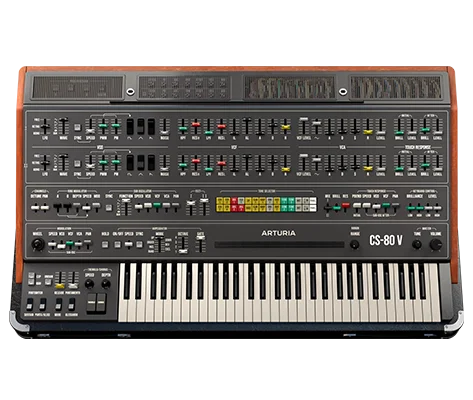
Both channel the Yamaha CS-80 character. JS80P is open source with a more technical interface, 64-note polyphony, 30 assignable macros, and PWM synthesis. Arturia CS-80 V4 ($149) offers a photorealistic GUI, modulation matrix, advanced arpeggiator, and NKS integration. JS80P focuses on deep parameter control and cross-platform flexibility while Arturia prioritizes visual realism and workflow integration.
What is the analog imperfection emulation in JS80P?
JS80P can emulate the organic drift of vintage analog hardware by introducing pitch inaccuracy and instability to the oscillators and filter cutoff. This recreates the subtle tuning variations and character of classic polysynths like the original CS-80, adding warmth and movement that pure digital synthesis lacks.