
Leigh Pierce Bass Pedals
Key Features
- Two complementary bass effects: a Bass Driver DI-inspired preamp and a B7K Ultra-inspired overdrive/DI.
- NoAmp Low Rider DI switches between V1 Early, V1 Late, and V2 circuit revisions from one plugin.
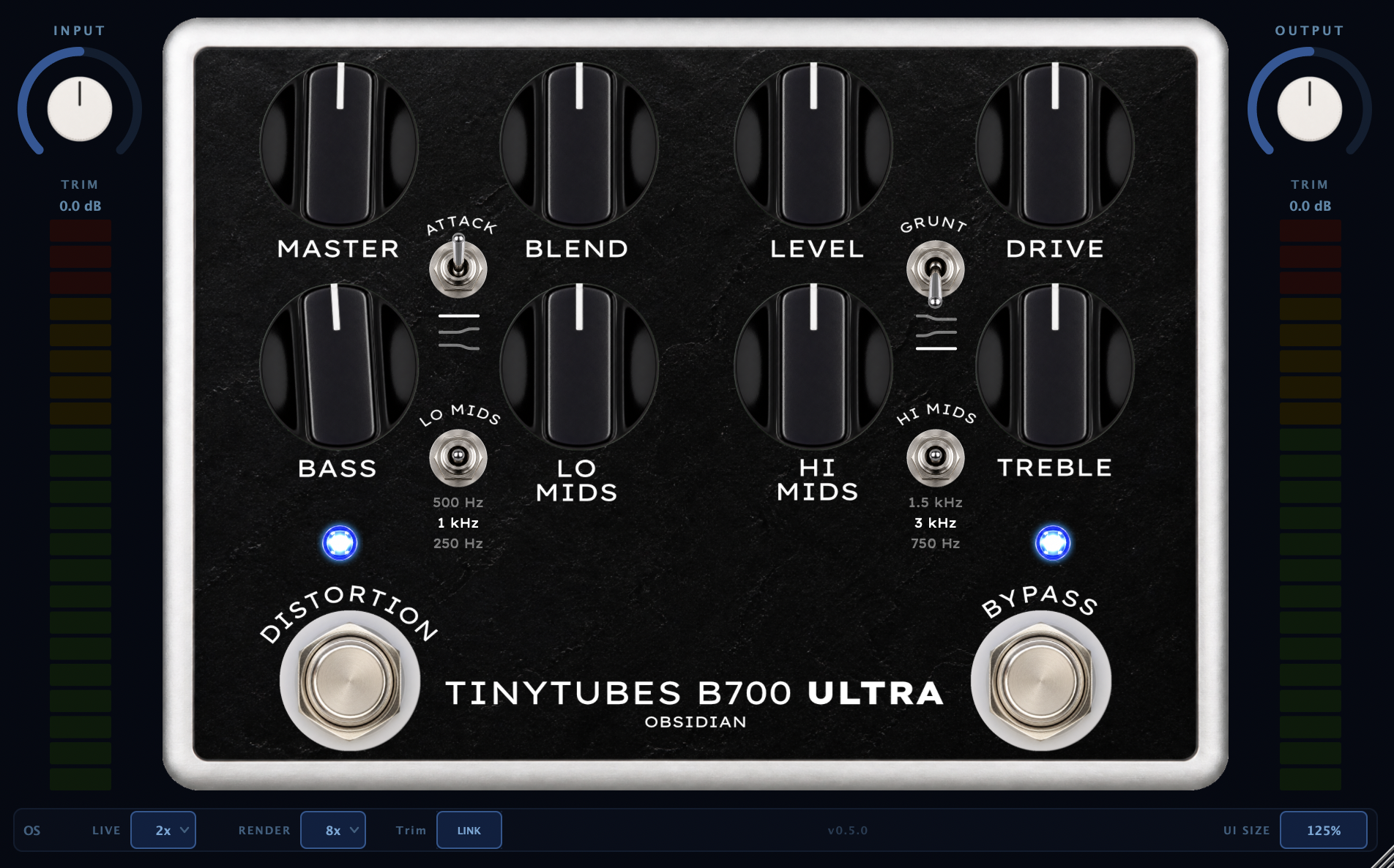
- Obsidian B7000 provides Master, Blend, Level, Drive, four-band EQ, Attack, Grunt, bypass, and distortion footswitch controls.
- Component-level circuit modeling avoids neural captures, so knob moves respond like modeled pedal circuits instead of snapshot blends.
- Switchable live and render oversampling helps balance tracking latency, CPU use, and high-frequency drive quality.
- Input and output trim with VU-style metering make gain staging easier before amp sims, cabinets, compressors, and mix processors.
- Public GitHub releases provide macOS, Windows, and Linux builds, with AU on macOS and VST3 across all three desktop platforms.
Description
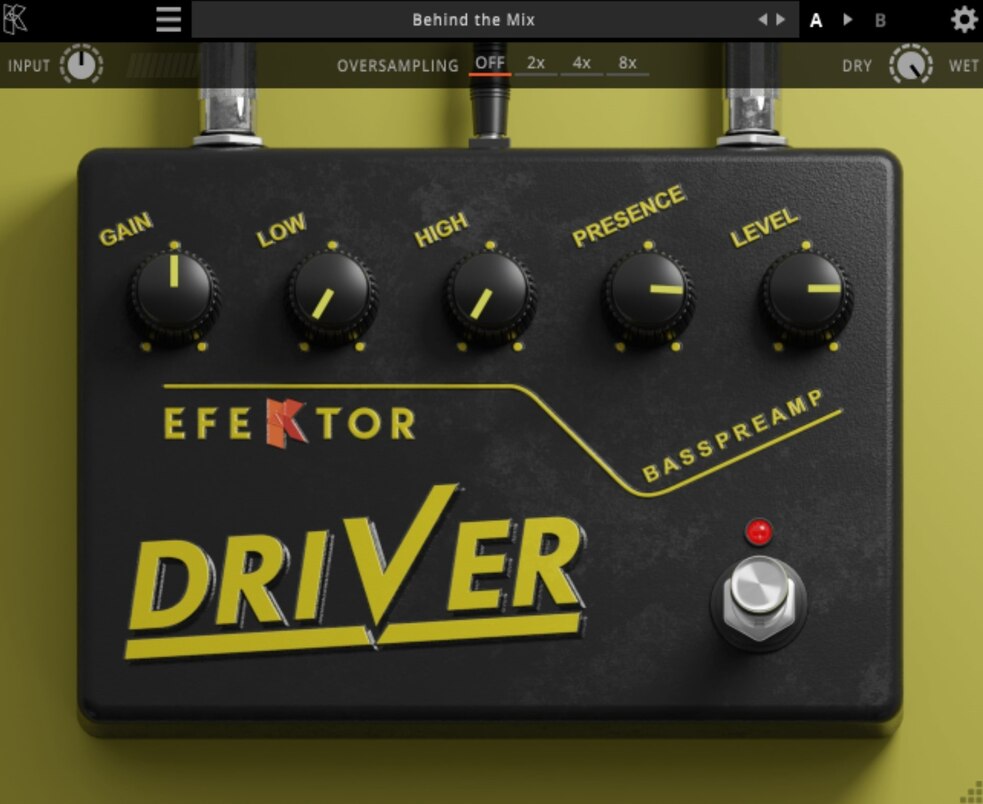
Leigh Pierce Bass Pedals collects two circuit-modeled bass DI and overdrive plugins: NoAmp Low Rider DI and Obsidian B7000. NoAmp targets three eras of SansAmp Bass Driver DI-style tone, while Obsidian focuses on a Darkglass B7K Ultra-style modern bass preamp sound.
The pair is built for direct bass tracks that need pedal-like response before an amp sim, cabinet stage, or mix chain. NoAmp covers revision-switchable clank, growl, cleaner DI shaping, and V2 mid controls; Obsidian adds blendable CMOS-style drive, active EQ, attack and grunt switches, and separate bypass and distortion footswitch behavior.
Both projects are open-source GitHub releases using component-level circuit analysis rather than neural captures or static profiles. The official READMEs describe Wave Digital Filter and MNA modeling, switchable live and render oversampling, input and output trim, VU metering, and resizable pedal interfaces.
This is a practical bass tone pair rather than a full amp suite. Use NoAmp for familiar Bass Driver DI coloration and Obsidian for more aggressive modern rock or metal bass grind, then choose cabinet, compression, and room treatment elsewhere in the chain.
Frequently Asked Questions
Are NoAmp Low Rider DI and Obsidian B7000 one plugin or two separate plugins?
They are two separate Leigh Pierce GitHub projects that were announced together and cover related bass DI workflows. NoAmp handles Bass Driver DI-style tone shaping, while Obsidian covers the more aggressive B7K Ultra-style preamp and overdrive lane.
How are these different from neural pedal captures?
The official project pages describe component-level circuit modeling, Wave Digital Filter networks, and MNA-modeled stages rather than captured snapshots. That means the controls are intended to interact like modeled circuits as you turn them.
Which plugin should I try first on a DI bass?
Start with NoAmp Low Rider DI for broad Bass Driver-style EQ, blend, presence, and drive shaping. Reach for Obsidian B7000 when you want a more modern driven bass sound with mid-frequency switches, attack/grunt voicing, and a separately switchable distortion path.
Do these include cabinet simulation?
The official pages position them as pedal/preamp plugins, not complete bass amp suites. Plan to add your preferred cabinet IR, amp simulator, or downstream mix processing after them if you need a finished amp-recorded bass tone.


