
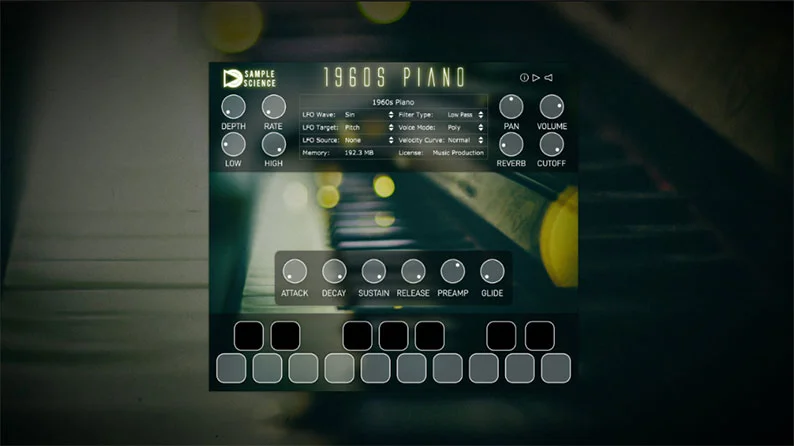
1960s Piano
Key Features
- Multi-sampled Kawai Model 600 semi-grand with four velocity layers for expressive, dynamic playing
- Built-in room reverb that adds vintage ambiance and dreamy character to the piano tone
- Three voice modes (polyphonic, monophonic, legato) for chords, leads, and smooth connected phrasing
- Lowpass and highpass filters with cutoff control for shaping tone from warm and muffled to bright
- Multi-LFO with adjustable wave, target, and source parameters for adding movement and modulation
- ADSR envelope controls with preamp gain staging and glide for sound shaping beyond basic piano
- Low CPU usage and single-panel interface for fast workflow in busy sessions
Description
1960s Piano by SampleScience is a virtual instrument built from multi-sampled recordings of an early 1960s Kawai Model 600 semi-grand piano. The sound is intimate, warm, and lo-fi, capturing the character of a piano that predates modern bright voicing.
Four velocity layers give the instrument an organic, dynamic response that reacts naturally to playing intensity. A built-in room reverb adds vintage ambiance, while lowpass and highpass filters let you shape the tone from mellow and subdued to bright and cutting.
Three voice modes expand the instrument beyond standard piano duties. Polyphonic mode handles chords and full arrangements, monophonic mode works for melodic leads, and legato mode enables smooth, connected phrasing with glide control.
The multi-LFO section adds movement through adjustable wave, target, and source parameters. Combined with ADSR envelope controls and preamp gain staging, this turns a straightforward piano sample into a more versatile sound design tool.
The plugin runs at low CPU usage, making it practical for sessions with many tracks. The interface keeps all controls visible on a single panel without menu diving, so adjustments happen quickly during production.
Video Preview

Frequently Asked Questions
What piano was sampled for 1960s Piano?
1960s Piano is based on recordings of an early 1960s Kawai Model 600 semi-grand piano, captured by SBelmont. The Kawai Model 600 was a studio and semi-grand piano known for its warm, slightly dark voicing compared to modern concert grands.
Can 1960s Piano be used for more than just lo-fi music?
Yes. While the warm, lo-fi character suits lo-fi hip-hop and ambient particularly well, the three voice modes (polyphonic, monophonic, legato), built-in filters, and multi-LFO make it versatile enough for indie rock, cinematic underscoring, and experimental sound design. The preamp and glide controls push it beyond typical piano plugin territory.
How many velocity layers does 1960s Piano have?
The plugin includes four velocity layers, which provide enough dynamic range to capture soft, expressive passages and harder, more percussive playing. Adjustable velocity curves let you fine-tune the response to match your playing style or controller sensitivity.
Does 1960s Piano support Apple Silicon Macs?
Yes. 1960s Piano runs natively on Apple Silicon (M1/M2/M3) Macs. It requires macOS El Capitan (10.11) or later and is available in VST, VST3, and AU formats for 64-bit DAWs.


