
Bit Layer
Key Features
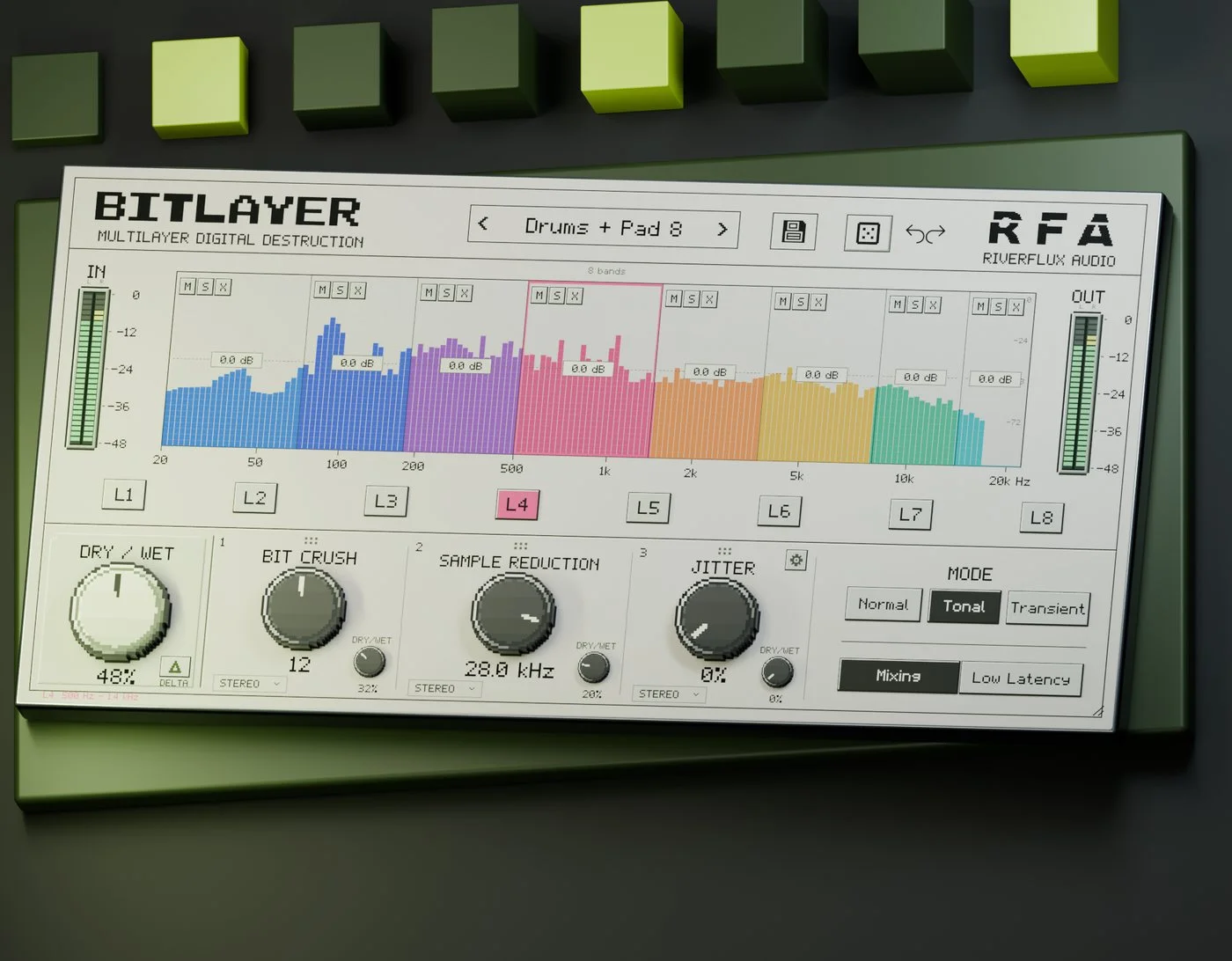
- Eight independently targeted layers divide bitcrushing across different frequency ranges.
- Bit-depth reduction, sample-rate reduction, and jitter create distinct kinds of digital degradation within each layer.
- Normal, Tonal, and Transient modes focus processing on a sound's full content, sustained body, or attacks.
- Per-layer effect order, gain, and mid/side routing provide control over texture and stereo placement.
- Dry/wet and per-processor mixing blend the affected signal with the original material.
- Mixing and Low Latency engines support precise band isolation or tracking and live workflows.
- Includes 88 factory presets for drums, bass, synths, vocals, and other sources.
Description
Bit Layer is a free multiband bitcrusher from RiverFlux Audio that divides digital degradation across eight independent layers. Each layer targets a frequency range and combines bit-depth reduction, sample-rate reduction, and jitter, so one part of a sound can become rougher without applying the same treatment everywhere.
Normal, Tonal, and Transient modes let processing address the whole selected content, its sustained body, or its sharp attacks. On drums, that gives you a way to focus grit on the upper percussion while leaving the low end less affected, rather than crushing the complete loop with one shared setting.
Each layer has its own effect order, gain, and mid/side routing alongside the degradation controls. Dry/wet and per-processor mixing help blend the altered material with the original, while mid/side choices let texture favor the center or the wider stereo information.
The Mixing engine prioritizes precise band isolation, while the Low Latency engine is intended for tracking and live use. RiverFlux supplies 88 factory presets covering drums, bass, synths, vocals, and other starting points.
Bit Layer is offered as a name-your-price download through the developer's Gumroad store, with zero accepted and donations optional. Windows and Linux builds provide VST3 and CLAP, while macOS adds AU support for Apple Silicon and Intel systems.
Video Preview

Frequently Asked Questions
How is Bit Layer different from a full-range bitcrusher?
It provides eight independently targeted frequency layers instead of one shared processing path for the whole signal. Each layer can use different bit depth, sample rate, jitter, routing, gain, and effect order.
What do Tonal and Transient modes target?
Tonal mode targets sustained content, while Transient mode targets sharp attacks. These choices let you apply different degradation to a sound's body and its percussive elements.
Which processing engine should I use?
The developer describes the Mixing engine as the option for precise band isolation. The Low Latency engine is presented as a zero-latency option for tracking and live use.
Can I process the center and sides differently?
Yes, each layer provides mid/side routing. This lets you direct its degradation toward the center, sides, or whole stereo image rather than applying the same texture everywhere.


