
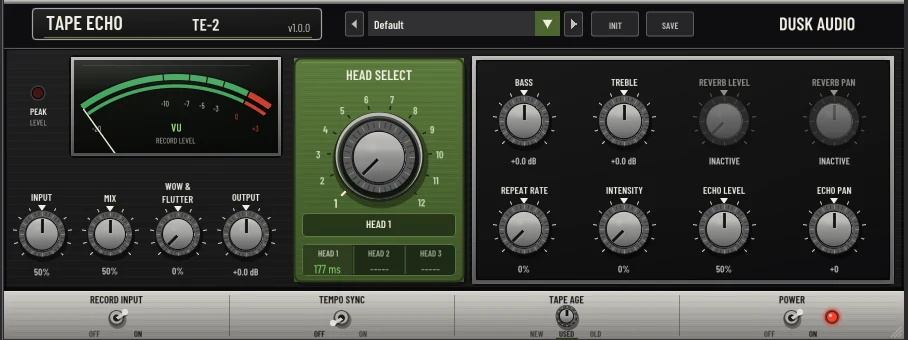
Tape Echo 2
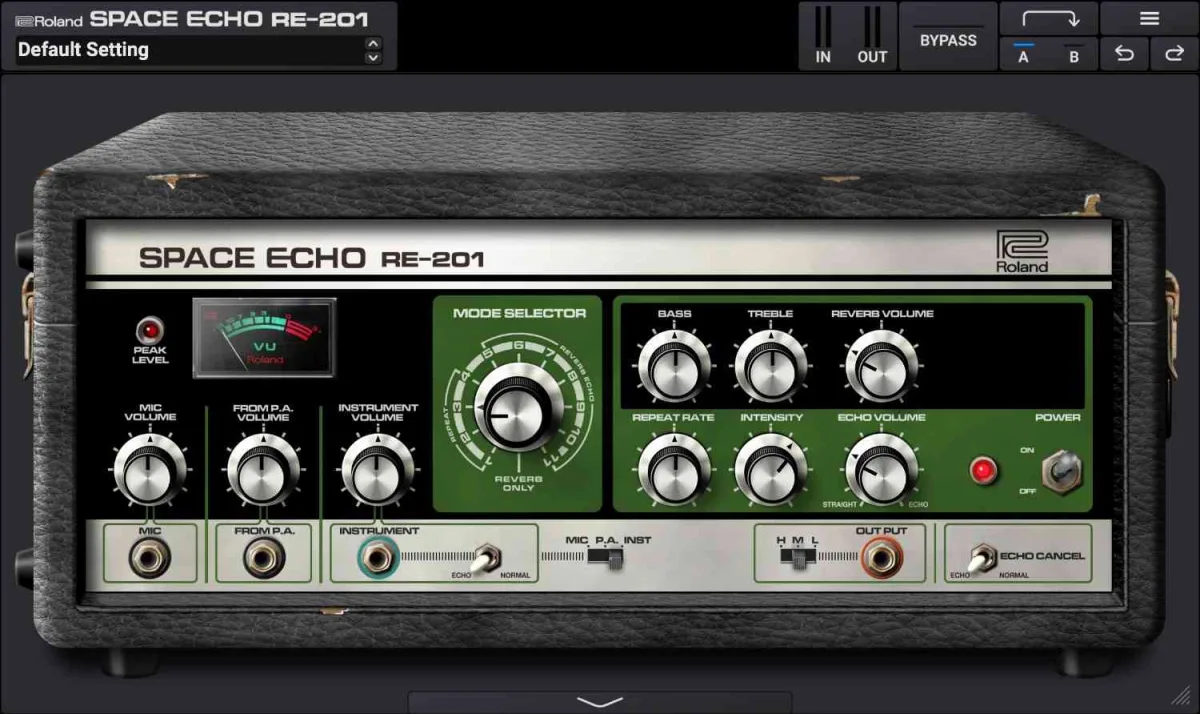
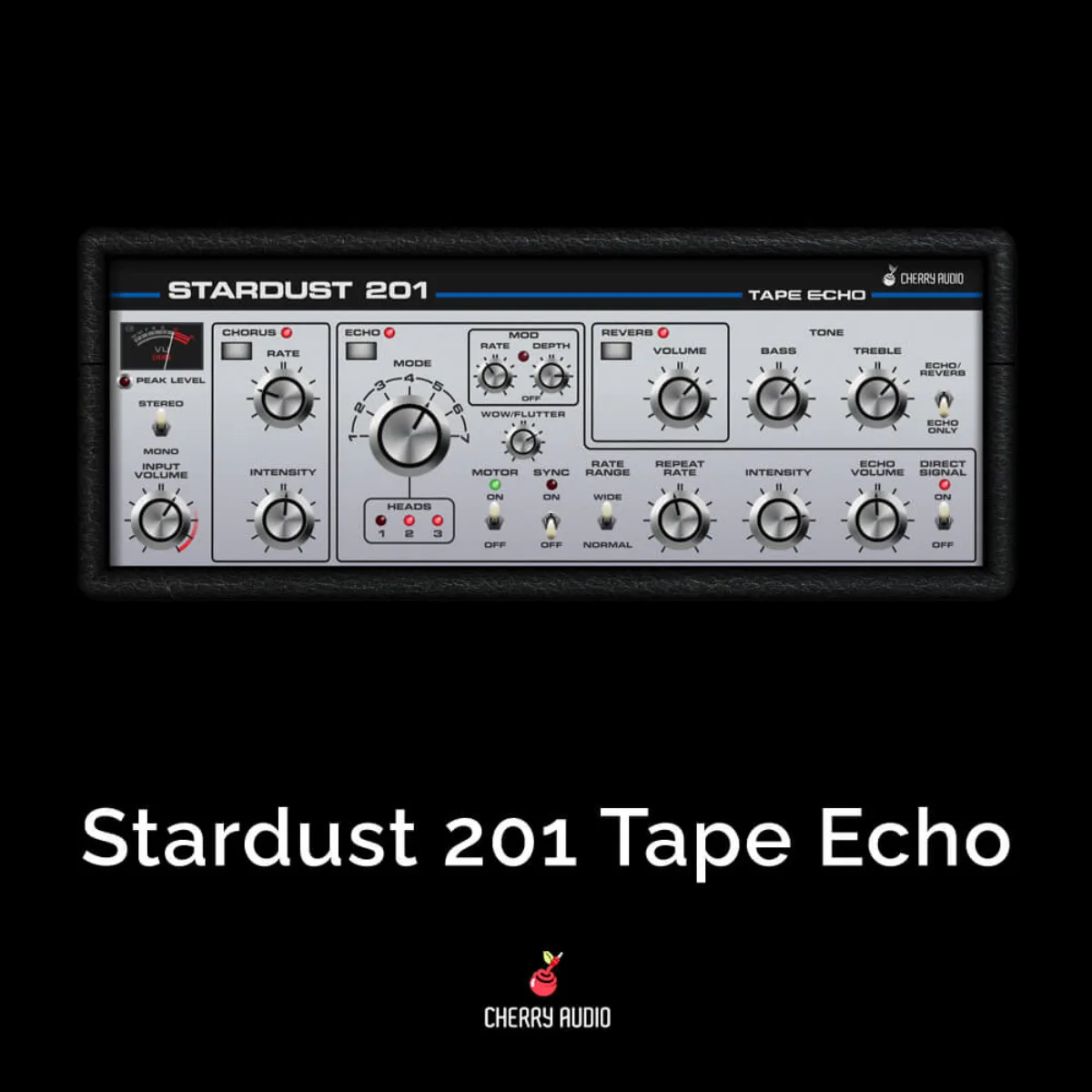
Key Features
- Three-head tape-delay behavior with linked motor timing across the playback heads
- Twelve echo modes that combine individual heads, multi-head patterns, and spring reverb
- Tape age settings that change wow, flutter, hiss, level wobble, and splice dropout together
- Tempo sync with note detents constrained to the modeled transport range
- Feedback path that moves from clean repeats into saturated self-oscillation
- Record-path VU and peak metering for watching the signal being written back to tape
Description
Tape Echo 2 is a three-head tape delay and spring reverb plugin built around a classic Space Echo-style workflow. It models the path from record head to output amplifier, so the repeats react like a linked tape transport instead of a clean delay line with color added afterward.
The main draw is how much movement sits inside the echo engine. Its twelve modes combine individual playback heads with spring reverb, while tape age changes wow, flutter, hiss, level wobble, and dropout together for tighter or more degraded repeats.
Tempo sync keeps the mechanical character intact by holding longer note values to the transport range, and the Repeat Rate glides rather than jumping when timing changes. Push the Intensity control and the feedback loop moves from soft cascades into saturated self-oscillation, with a VU meter showing the record path before the loop gets out of hand.
This is especially useful for dub throws, ambient trails, guitar slapback, synth movement, and vocal delay sends that need character without a complicated modular setup. Compared with many vintage delay plugins, Tape Echo 2 keeps the control set direct while still giving you modern format coverage across macOS, Windows, and Linux.
Frequently Asked Questions
Does Tape Echo 2 model the full tape transport or just add tape color to a delay?
Dusk Audio describes it as a model of the machine from the record head to the output amplifier. The three playback heads share one motor, so timing changes affect the whole rhythm and glide like a transport instead of stepping like a basic digital delay.
Can Tape Echo 2 self-oscillate?
Yes. The Intensity control can push the feedback path beyond normal repeats into runaway behavior, and Dusk Audio says the loop saturates through the modeled tape path rather than clipping as a simple digital feedback loop.
What makes the spring reverb section different from a separate reverb plugin?
The spring tank is part of the tape-echo workflow, with several modes routing different head combinations through reverb. Tape Echo 2 also lets you pan the echo and spring independently, so it can act like a compact vintage delay-and-reverb send.


