
Gloss
Key Features
- Crossfades between two vintage string-synth ensemble chorus models
- Tone and grit controls shape the chorus from smooth shimmer to noisier retro texture
- One-knob reverb moves from medium-room space to a chorused synthetic cathedral sound
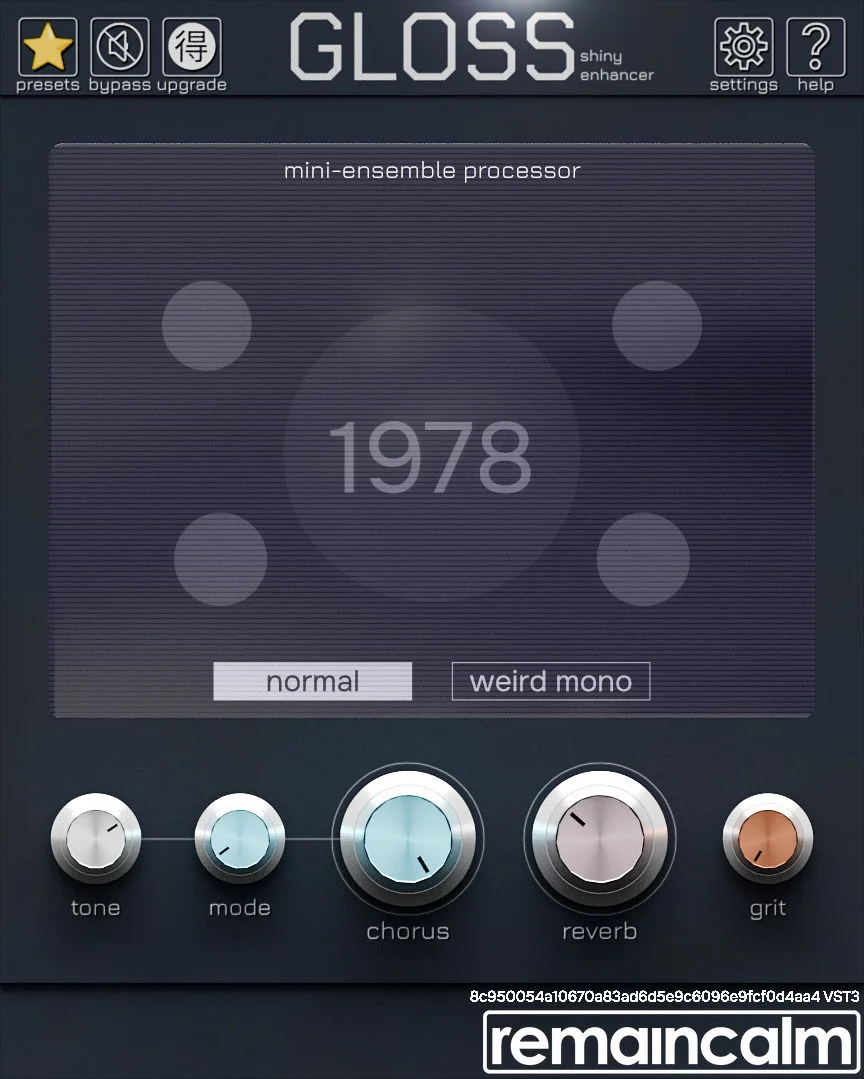
- Five always-visible controls keep the plugin fast for sound design and mix sweetening
- Preset bank gives quick starting points for synths, keys, guitars, and vocals
- Hover text explains each control directly inside the plugin interface
Description
Gloss is a tiny vintage enhancer from Remaincalm that combines two 70s-inspired ensemble chorus models with a simple reverb and a touch of modeled grit. It is built to add sheen, space, and texture to synths, guitars, vocals, and electric keys without turning the session into a deep modulation-editing exercise.
The core chorus section crossfades between two modeled string-synth circuits: one based on an early-70s European style and one derived from a rare late-70s Japanese flagship synth. Tone and grit controls let the effect move from soft stereo shimmer to noisier, more characterful movement, while the one-knob reverb stretches from a medium room into a synthetic cathedral-style wash.
Gloss works best when a part already has the right notes but needs more age, width, or motion. The five-knob layout, hover help, and preset bank make it quick enough for sound-design sketches, but the sound has enough color for final pads, guitar layers, vocal throws, and retro keyboard parts.
Video Preview

Frequently Asked Questions
What kind of effect is Gloss?
Gloss is an audio effect, not an instrument. It combines ensemble chorus, reverb, and a small amount of saturation/noise character to enhance sounds that are already playing in your DAW.
How is Gloss related to Remaincalm Gossamer?
Remaincalm says the chorus and reverb in Gloss are adapted from modules in its commercial Gossamer modulation plugin. Gloss is a smaller, simpler enhancer focused on fast vintage chorus and reverb color.
What sources does Gloss work best on?
The official page highlights retro synth sounds and guitar, while the BPB article also notes electric pianos and vocals. It is strongest on parts that benefit from width, gentle motion, and a more aged modulation character.
Does Gloss need an input signal?
Yes. The official page notes that Gloss is an effect processor, so you need a sound source such as a synth, guitar, vocal, or audio track to run through it.


