
Harmonus 300
Key Features
- Stereo-sampled Magnus Model 300 Harmonium delivering an authentic analog reed organ tone with natural warmth and character
- One-finger chord mode for instantly playing major and minor chords from a split keyboard layout
- Extended 88-key range expanding the original two-octave instrument into a full-sized playable keyboard
- Built-in reverb, chorus, tremolo, and EQ effects for shaping the sound without external plugins
- ADSR envelope shaping with adjustable attack, decay, sustain, and release parameters
- Semitone and octave transpose controls for quick key changes during composition
- Low CPU usage and 64 voices of polyphony for smooth performance in complex sessions
Description
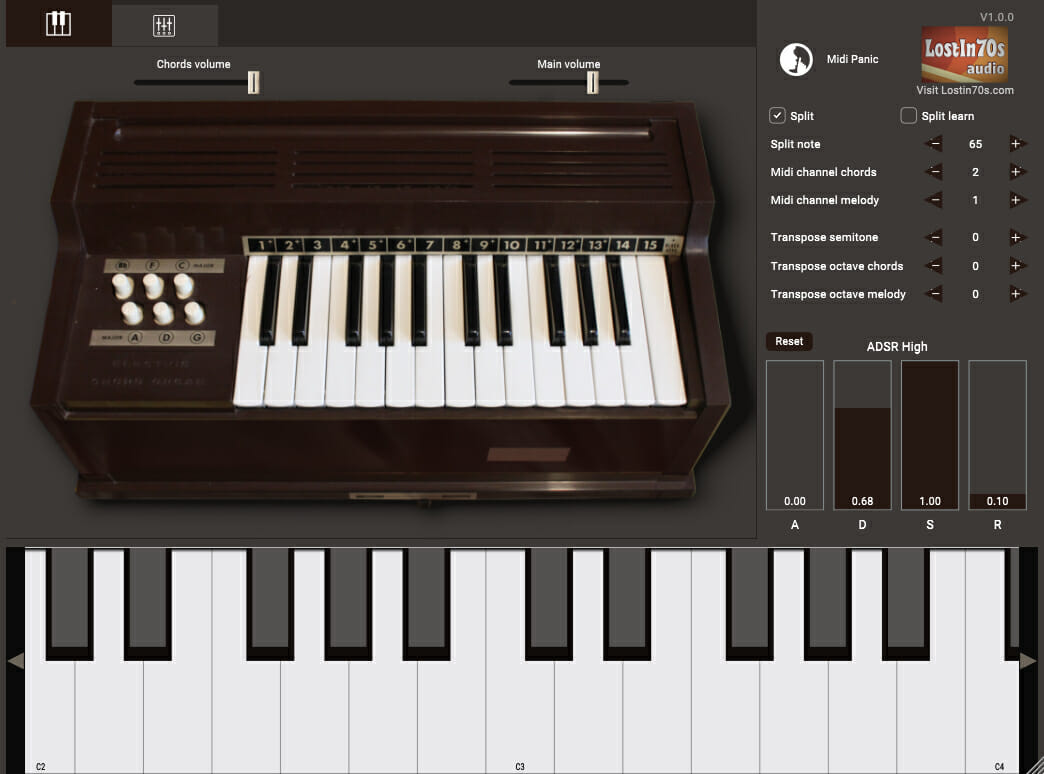
Harmonus 300 by Lost in 70s is a sample-based virtual organ inspired by the Magnus Model 300 Harmonium, a portable reed organ manufactured by the Magnus Harmonica Corporation in the late 1960s. The plugin captures the instrument's distinctive tone, which sits somewhere between an accordion and a harmonica, delivering warm, analog character that is difficult to replicate with synthesis alone.
The original organ's samples were recorded in stereo and carefully denoised to preserve the natural resonance of the reeds while removing the mechanical noise from the built-in fan. This results in a clean, usable sound that retains the organic imperfections and tonal warmth of the vintage hardware.
A standout feature is the one-finger chord mode, which lets you trigger major chords with a single key press and minor chords with two keys on the left side of a split keyboard. The original instrument's two-octave range has been extended to a full 88-key layout, making it practical for arrangements that need more melodic freedom than the hardware could provide.
Four built-in effects round out the sound-shaping options: reverb for spatial depth, chorus for stereo width, tremolo for rhythmic movement, and a basic EQ for tonal adjustments. ADSR envelope controls and semitone transpose give you additional flexibility without needing external processing.
With low CPU usage and a 29 MB download, Harmonus 300 loads quickly and runs efficiently even in larger sessions. The straightforward interface puts every control on a single panel, keeping the workflow simple and immediate.
Video Preview


Frequently Asked Questions
What kind of sound does Harmonus 300 produce?
Harmonus 300 recreates the sound of a 1960s Magnus Model 300 reed organ, which has a tone somewhere between an accordion and a harmonica. It is warm, slightly breathy, and distinctly vintage rather than the bright, percussive tone of a tonewheel organ like a Hammond.
How does the one-finger chord mode work?
When the split keyboard is enabled, pressing a single key on the left side triggers a major chord, while pressing two keys triggers a minor chord. This mirrors how the original Magnus organ worked and makes it easy to lay down chord progressions quickly.
Does Harmonus 300 work on Apple Silicon Macs?
The macOS version provides AU and VST3 formats, but some users on newer Apple Silicon Macs running macOS Sequoia have reported compatibility issues including no audio output. If you encounter problems, try running your DAW in Rosetta mode as a workaround.
Can I use Harmonus 300 as a standalone application?
Yes, Harmonus 300 can run as a standalone application outside of a DAW. This makes it convenient for practice, sound design sessions, or quick sketching without needing to load a full project.


