Model-E
Key Features
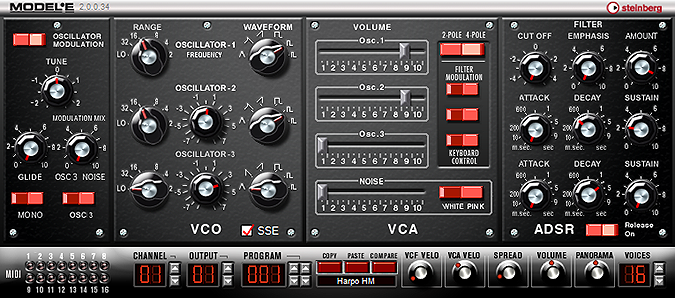
- Three oscillators with six waveforms each spanning a 32-foot to 2-foot range, delivering the thick layered tones associated with Minimoog-style synthesis
- Switchable 2-pole and 4-pole low-pass filters with resonance, key tracking, and envelope modulation for everything from subtle warmth to aggressive sweeps
- 64-voice polyphony and 16 multitimbral parts, expanding far beyond the monophonic limitations of the original hardware
- Two dedicated envelope generators for amplitude and filter shaping, plus glide control for smooth pitch portamento between notes
- Ultra-low CPU usage allows running multiple instances simultaneously without noticeable performance impact on modern systems
- Eight discrete outputs and stereo spread controls for detailed spatial placement and routing flexibility in your DAW mixer
- 128 onboard memory slots for storing and recalling patches, with full MIDI support for automation and external controller mapping
Description
Model-E by Steinberg is a virtual analog synthesizer modeled after the legendary Moog Minimoog Model D. It holds a unique place in music production history as one of the very first commercially available VST instrument plugins.
The synth engine features three oscillators with six selectable waveforms each, a noise generator, and switchable 2-pole or 4-pole low-pass filters with key tracking and modulation. Two envelope generators handle amplitude and filter shaping alongside glide control and assignable velocity routing for expressive performances.
Despite its heritage as a monophonic bass machine, Model-E expands well beyond the original hardware with 64-voice polyphony and 16 multitimbral parts across 8 outputs. Stereo spread and pan controls give spatial dimension that the original Minimoog never offered, while 128 built-in memory slots keep patches organized.
The plugin runs with remarkably low CPU overhead, making it practical to load multiple instances without taxing your system. Users note that it delivers fat, characterful oscillators and a warm filter, though the modulation options are more limited than modern synths.
Model-E ships as part of VST Classics Volume 1 alongside VB-1 virtual bass guitar. Steinberg has classified it as unsupported software, meaning no future updates are planned but the current build remains functional on modern systems.
Video Preview

Frequently Asked Questions
What is the Steinberg Model-E modeled after?
Model-E is a virtual recreation of the Moog Minimoog Model D, one of the most iconic analog synthesizers in music history. It replicates the three-oscillator architecture, ladder filter, and overall tonal character of the original hardware in a VST plugin format.
Is Steinberg Model-E compatible with modern DAWs?
Model-E uses the VST 2.0 format and is available in both 32-bit and 64-bit versions for Windows and macOS. Most modern DAWs still support VST2 plugins, though some newer hosts have moved to VST3-only support. Check your DAW's plugin compatibility before installing.
What is the best paid alternative to Steinberg Model-E?
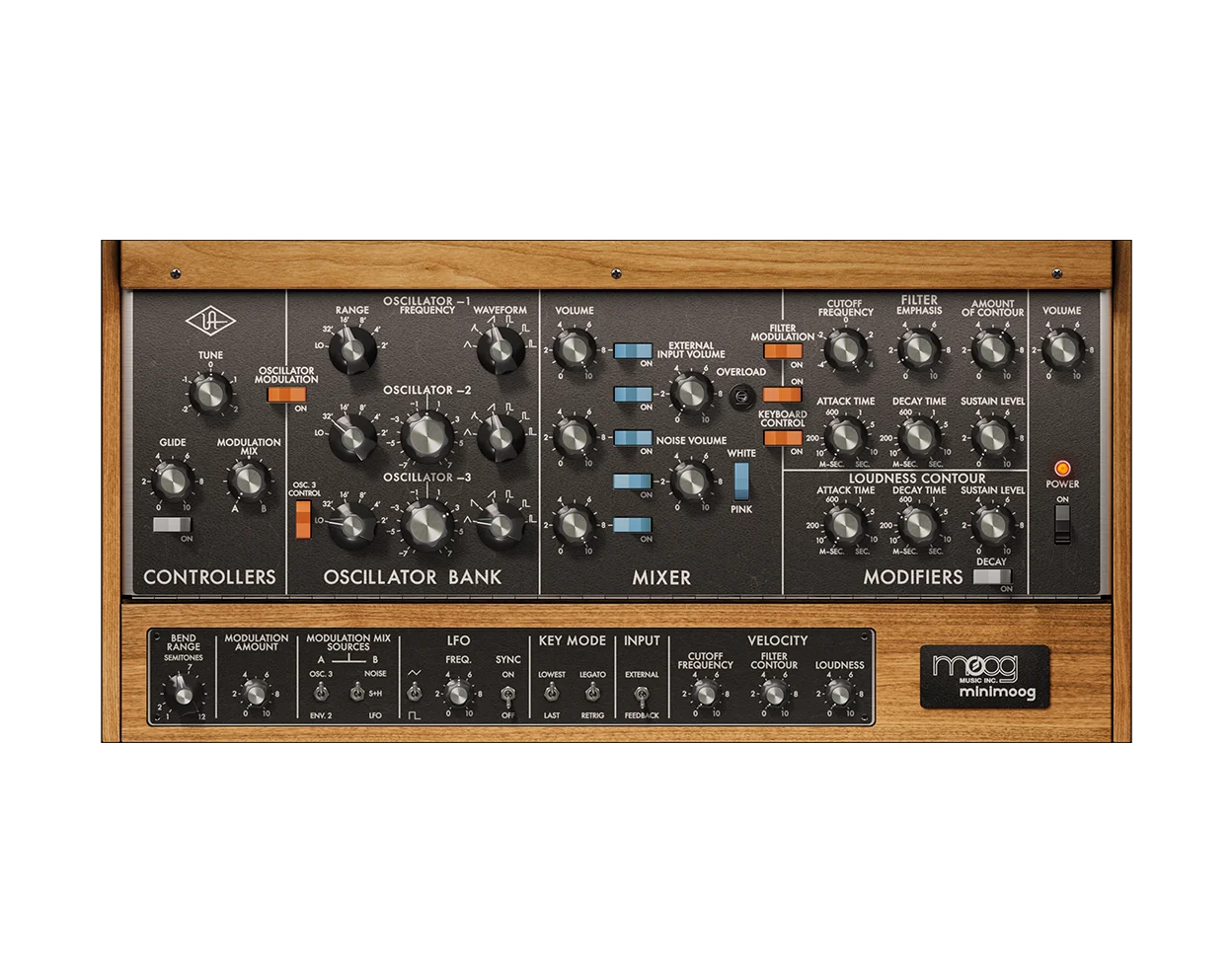
The Universal Audio Moog Minimoog is widely regarded as the most authentic Minimoog emulation available, developed in direct partnership with Moog Music. Cherry Audio Miniverse is another strong option that offers polyphonic expansion and over 250 presets at a lower price point.
Does Model-E support polyphony?
Yes, unlike the original monophonic Minimoog hardware, Model-E offers up to 64-voice polyphony and 16 multitimbral parts. This makes it suitable for chords, pads, and layered sounds in addition to traditional mono bass and lead lines.