
Numa Player
Key Features
- Six sound categories spanning acoustic pianos, electric pianos, keys, organs, strings, and pads with dozens of individually playable instruments
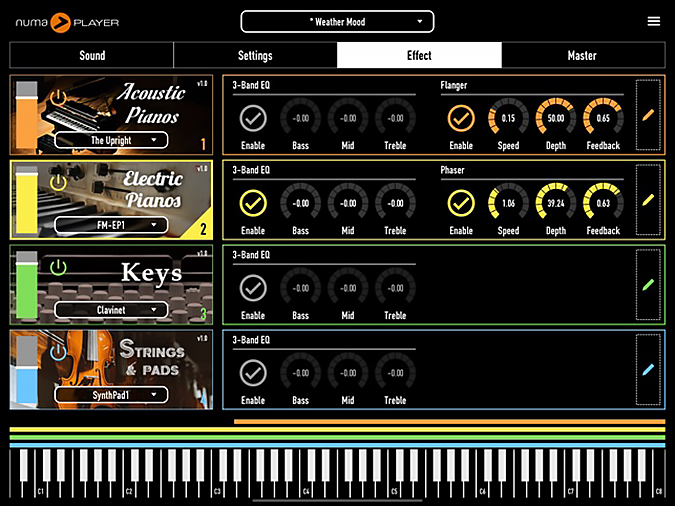
- Unlimited zone layering and splitting with independent sound parameters, keyboard ranges, MIDI assignments, and color-coded visual organization
- Multi-core optimized sound engine delivering high polyphony and ultra-low latency for live performance and studio use
- Nine insert effects per zone including chorus, phaser, flanger, tremolo, wah, and compressor plus a master effects bus with reverb, delay, EQ, and multiband compression
- Realistic acoustic piano behavior with continuous half-pedaling, repedaling, sympathetic resonance, and adjustable damper noise modeling
- Responsive scalable UI that adapts to any monitor size with MIDI learn support for mapping parameters to hardware controllers
Description
Numa Player is a multi-instrument workstation from Studiologic, the Italian keyboard manufacturer behind the Numa hardware series. It packs acoustic pianos, electric pianos, keys, strings, pads, and organs into a single plugin with a zone-based architecture that lets you layer and split sounds across your keyboard.
The acoustic piano models include a Steinway Model D and Fazioli Model F alongside an upright and a CP-70-style electric grand. Electric pianos cover the Rhodes Mark I and II, Wurlitzer 200 and 250, plus four FM electric piano variations.
The keys category adds clavinet, harpsichord, vibraphone, marimba, celesta, and multiple accordion voices. An organs bank rounds out the collection with B3, pipe organ, and FM organ patches.
Version 2.0 introduced a reworked sound engine with multi-core CPU support for significantly improved polyphony and lower latency. The zone system was upgraded from the original four-part limit to unlimited zones, each with independent sound parameters, keyboard ranges, MIDI settings, and color coding for quick visual navigation during live performance.
The acoustic pianos have drawn favorable comparisons to Nord piano sounds, with realistic attack and sustain behavior including continuous half-pedaling and sympathetic resonance modeling. The electric pianos and clavinet are considered standout patches, while the strings and pads lean more toward classic rompler character.
Each zone has access to nine insert effects including chorus, phaser, flanger, tremolo, wah, ping-pong delay, compressor/limiter, and distortion. A master effects section adds reverb, delay, three-band EQ, and multiband compression on top.
Video Preview
Frequently Asked Questions
Does Numa Player support keyboard splits and layers?
Yes. Version 2.0 introduced unlimited zones, each with its own sound, keyboard range, and MIDI settings. You can stack multiple instruments across different key ranges and adjust them independently, making it well-suited for live performance setups.
How does Numa Player compare to sample-based piano plugins?
Numa Player uses a hybrid sampling and modeling approach, which keeps the file size small while delivering realistic behavior like sympathetic resonance and half-pedaling. The acoustic pianos have been favorably compared to Nord piano sounds, though dedicated sample libraries with multi-gigabyte downloads will offer more microphone positions and tonal depth.
What sound categories are included?
The plugin ships with six categories: Acoustic Pianos (grand pianos, upright, electric grand), Electric Pianos (Rhodes, Wurlitzer, FM), Keys (clavinet, harpsichord, vibraphone, marimba, celesta, accordion), Organs (B3, pipe organs, FM organs), Strings & Pads (string ensembles, cellos, synth pads, voice pads, choirs). Each instrument has dedicated sound-shaping controls.
Can Numa Player be used standalone without a DAW?
Yes. Numa Player works both as a standalone application and as a DAW plugin in VST3 and AU formats. The standalone mode includes its own audio and MIDI setup, making it a good option for live keyboard rigs where running a full DAW is unnecessary.


