
Roker Pack
Key Features
- Bundle splits the release into dedicated fuzz, overdrive, distortion, flanger, saturator, EQ, and tuner modules, so you can load only the tool you need instead of opening a fixed guitar rack every time
- Bronza keeps the fuzz side intentionally simple with two controls, making vintage-leaning breakup quick to dial for garage riffs, leads, and dirtier texture layers
- Grelka pairs drive and level with low and high shaping, which gives the overdrive slot more useful guitar voicing control than many tiny freeware pedals
- Metalluga adds a gate alongside its drive section, making it the obvious choice for tighter riff work or noisier pickups that need extra cleanup before the rest of the chain
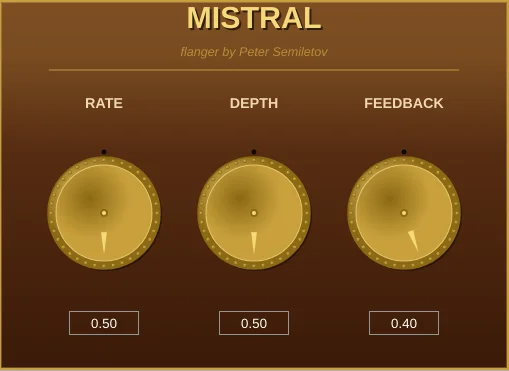
- Mistral, Charm, and Tembr round out the pack with warm flanging, quick analog-style saturation, and guitar-voiced bass/treble EQ instead of limiting the bundle to dirt sounds alone
- GuitarTuner and BassTuner add note display, frequency readout, and fretboard or string visualization, turning the pack into a usable practice and tracking toolkit instead of just a tone experiment
Description
Roker Pack is Peter Semiletov's first stable guitar-focused VST3 bundle for Windows and Linux, built around individual stompbox-style processors and tuners rather than a single amp-suite workflow. The release is positioned as a set of original effects with their own character, so the appeal is less about recreating famous pedal history and more about getting a compact toolkit of fuzz, overdrive, distortion, modulation, EQ, and tuning utilities.
The pack covers more ground than a simple drive bundle. Bronza handles sixties-style fuzz, Grelka adds classic overdrive with low and high tone shaping, Metalluga pushes into gated hard distortion, Mistral brings warm vintage flanging, Charm adds one-knob saturation, and Tembr supplies a Baxandall-style EQ voiced specifically for guitar instead of general mix work.
The tuners are what make it feel practical day to day. GuitarTuner and BassTuner include note display, frequency readout, and fretboard or string visualization, and the official usage notes even spell out how tuning order and muting already tuned strings can improve pitch-detection stability.
As checked on April 24, 2026, Roker Pack still clears the permanence test. The official site links directly to public version 1.0.0 downloads, the latest GitHub release exposes live Windows and Linux binaries, and the current product listing still marks it as Free and Public Domain rather than a timed giveaway.
Frequently Asked Questions
Is Roker Pack trying to emulate famous pedals?
No. Peter Semiletov explicitly says the pack is not an emulation of classic Boss or Ibanez pedals. The goal is to deliver his own homegrown guitar effects with their own sound character.
What plugins are included in the bundle?
Version 1.0.0 includes Bronza fuzz, Grelka overdrive, Metalluga distortion, Mistral flanger, Charm saturator, Tembr guitar EQ, GuitarTuner, and BassTuner. They are distributed together as one pack, but each module has its own separate role and interface.
Does Roker Pack include an amp or cabinet simulator?
No dedicated amp head or cabinet section is described on the official page. It makes more sense as a pedal-and-utility bundle that you place before an amp sim, IR loader, or clean DI recording chain.
How should I use the tuners for the most stable results?
The official instructions recommend tuning guitar from the thinnest string to the thickest so leftover vibrations from lower strings do not confuse the detector. If you tune from low to high instead, mute the strings you already tuned before plucking the next note.
Is Tembr meant to be a general-purpose mix EQ?
Not really. The official description calls it a Baxandall-style EQ tuned specifically for guitar, so it fits better as a quick tone-shaping stage inside a guitar chain than as a broad surgical EQ for every source.


