
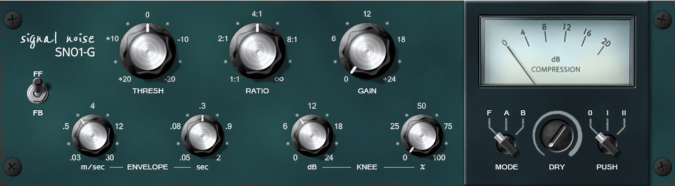
SN01-G
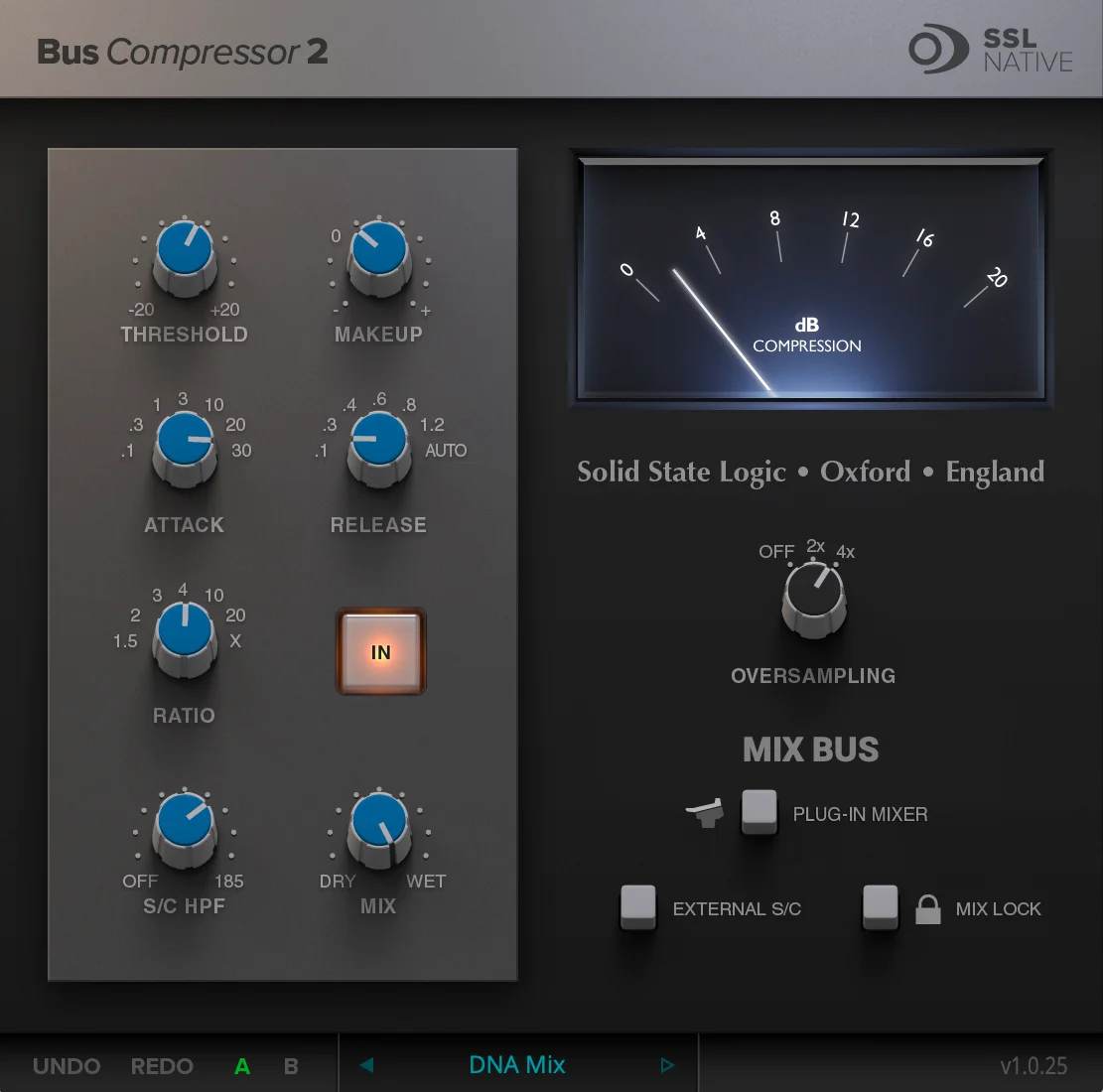
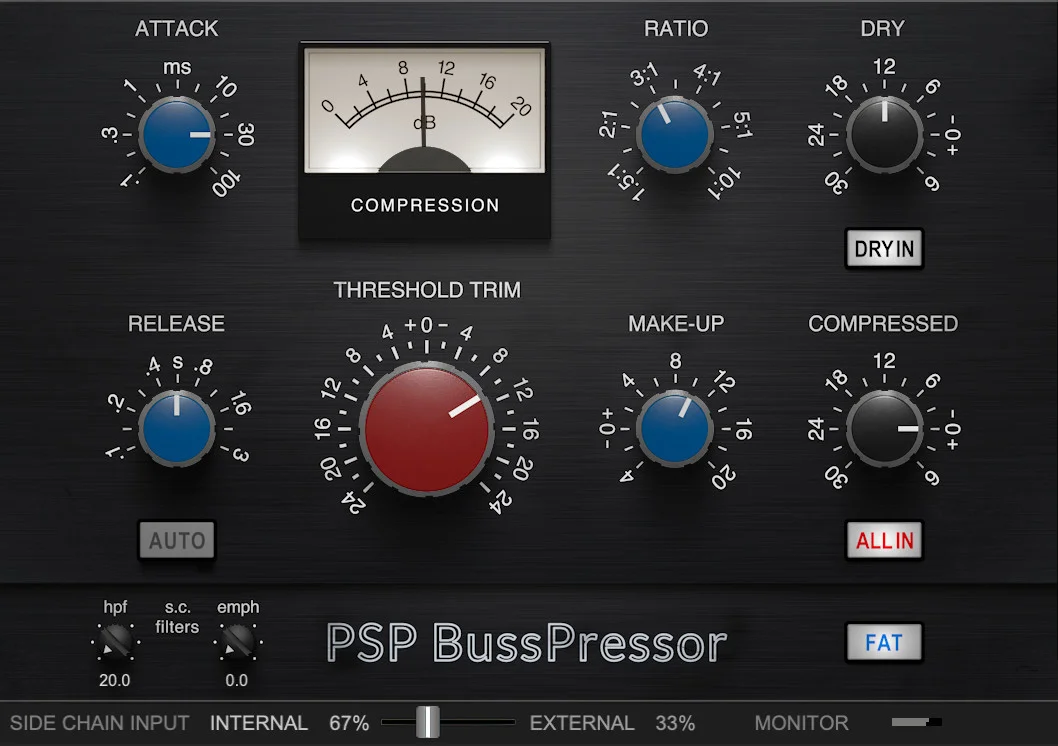
Key Features
- VCA compression modeled after two legendary British and American bus compressors with switchable feed-forward and feedback topology
- Highly adjustable knee with independent width (0-24 dB) and strength controls for precise compression character shaping
- Two internal sidechain filters to tame low-end pumping on bus and mix duties
- Push mode for driving the compressor into more aggressive, characterful compression beyond subtle glue
- Built-in parallel compression via wet/dry mix control (0-100%) without requiring aux routing
- Ultra-fast attack from 0.03 ms to 30 ms with release from 50 ms to 2 seconds, covering everything from drum transient control to smooth bus glue
- Extremely low CPU footprint suitable for running multiple instances across a full mixing session
Description
SN01-G is a VCA-style dynamic range compressor inspired by two iconic bus compressors of British and American heritage. Developed by Sender Spike under the Signal Noise line of effects, it delivers the musical glue and cohesion that producers expect from classic console-style compression.
The plugin ships in two versions: SN01, a GUI-less variant for minimal resource usage, and SN01-G, which adds a full-color graphical interface. Both share an identical audio engine with switchable feed-forward and feedback topology, giving you access to distinctly different compression characters from a single plugin.
What sets SN01-G apart from typical compressor plugins is its deeply adjustable knee section. Width ranges from 0 to 24 dB and an independent strength control lets you shape the transition from uncompressed to compressed signal with unusual precision.
Two optional sidechain filters let you shape the detector signal internally, making it easy to prevent low-end pumping on bus duties. The dedicated push mode drives the compressor into more aggressive, characterful behavior when subtle glue is not enough.
Parallel compression is built right in via a wet/dry mix control, eliminating the need for aux routing. The CPU footprint stays remarkably low, making it practical to run multiple instances across a full mixing session without audible latency or system strain.
Users consistently praise SN01-G for punching well above its weight, noting that it rivals commercial bus compressors in transparency and musicality. The combination of versatile topology switching, deep knee control, and efficient processing makes it a genuinely capable channel and bus compressor.
Video Preview


Frequently Asked Questions
What is the difference between SN01 and SN01-G?
SN01 is a GUI-less version designed for minimal resource usage, while SN01-G includes a full graphical user interface with color-coded controls. Both versions share the exact same audio engine and produce identical results.
What does the feed-forward and feedback topology switch do?
Feed-forward topology detects the signal before compression is applied, producing a more precise and predictable response. Feedback topology routes the compressed signal back to the detector, creating a smoother, more musical compression character similar to vintage hardware. Switching between the two gives you distinctly different compression flavors from the same plugin.
How does the push mode work?
Push mode drives the compressor into more extreme compression behavior, adding extra character and aggression beyond what the standard threshold and ratio controls achieve on their own. It is useful for creative parallel compression effects or when you need more obvious compression on individual channels.
Can SN01-G handle bus compression without low-end pumping?
Yes. SN01-G includes two optional internal sidechain filters that let you shape the detector signal. Engaging a high-pass filter on the sidechain prevents bass-heavy material from triggering excessive gain reduction, which is the standard technique for clean bus compression on full mixes.


