
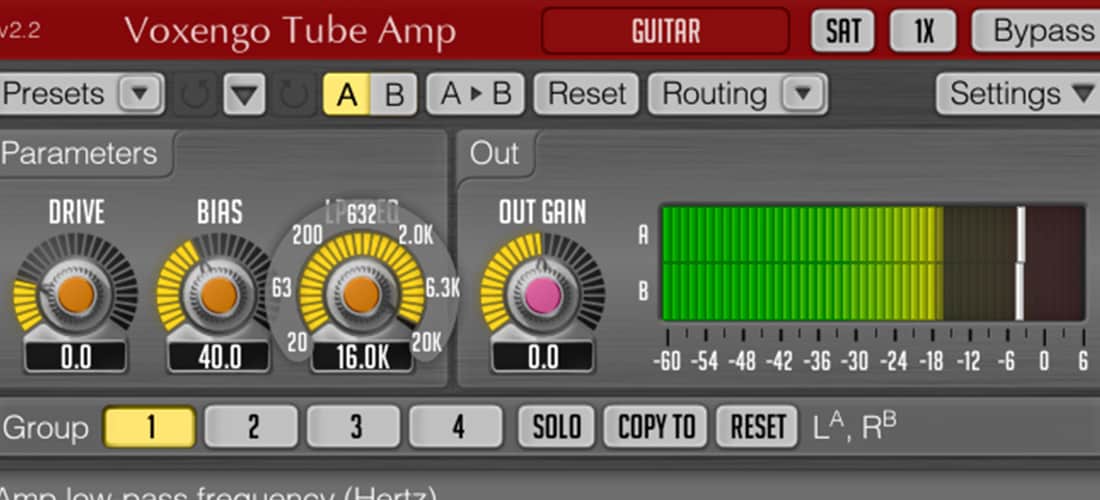
Tube Amp

Key Features
- Asymmetric tube triode overdrive ranging from subtle warmth to aggressive fuzzy distortion
- Two processing modes: smooth saturation for mix bus warmth and aggressive overdrive for crunchy textures
- Built-in variable low-pass filter integrated into the valve model for vintage tube character shaping
- Dedicated output saturator stage for a second layer of harmonic excitement and drive
- Up to 8x oversampling with 64-bit floating point processing for artifact-free saturation
- Full multi-channel and mid/side processing with internal channel routing
- Zero processing latency with resizable interface and multiple color schemes
Description
Voxengo Tube Amp models the asymmetric behavior of a single-tube triode, the same type of circuit found in high-end microphone preamp boxes. It delivers everything from a subtle harmonic glow to aggressive, fuzzy overdrive depending on how hard you push the Drive and Bias controls.
Two distinct processing modes expand its range considerably. Mode 1 provides a smoother, warm saturation ideal for rounding out vocals, acoustic instruments, and full mixes.
Mode 2 shifts into more aggressive territory, producing crunchy overdrive textures suited to electric bass, guitars, and sound design. This dual-mode approach covers everything from gentle preamp coloring to full-on crunch in a single plugin.
A built-in variable low-pass filter is woven directly into the valve modeling equation, letting you roll off high frequencies to mimic the character of lower-fidelity vintage tubes. The dedicated output saturator stage adds a second layer of harmonic excitement on top, pushing signals into thicker, more saturated territory when both stages are engaged.
Users regularly praise Tube Amp for handling the majority of their saturation needs across an entire session, from gentle bus warmth to mangled distortion on individual tracks. Its low CPU footprint means running multiple instances simultaneously is practical even on modest systems.
The plugin includes Voxengo's full professional feature set: multi-channel and mid/side processing, internal channel routing, up to 8x oversampling, 64-bit floating point audio, A/B comparisons, and a resizable interface with multiple color schemes. Processing latency is zero, so it works equally well during tracking and mixing.
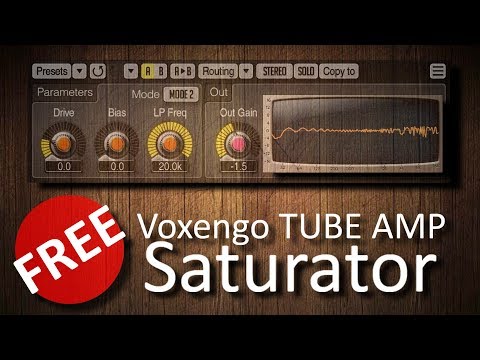
Video Preview

Frequently Asked Questions
What is the difference between Mode 1 and Mode 2 in Tube Amp?
Mode 1 produces a smoother, subtler tube saturation that works well for warming up vocals, acoustic instruments, and master bus processing. Mode 2 delivers a much more aggressive overdrive character, suitable for crunchy guitar tones, distorted bass, and creative sound design.
Can Tube Amp be used on the master bus?
Yes. With minimal Drive and Bias settings, Tube Amp adds subtle harmonics that make a mix sound rounder and fuller without obvious distortion. Many users run it on the master bus as a gentle tube-style glue to add analog character to their final mix.
How does the output saturator stage work alongside the main tube drive?
The output saturator is an independent saturation stage that processes the signal after the main tube triode section. Engaging both stages together lets you stack two types of harmonic distortion, pushing the sound into thicker, more heavily saturated territory than either stage alone.
Does Tube Amp support Apple Silicon Macs natively?
Yes. Tube Amp runs natively on Apple Silicon processors and officially supports macOS Sonoma, Sequoia, and Tahoe. It also includes AVX2 optimization for supported Intel and AMD processors.


