
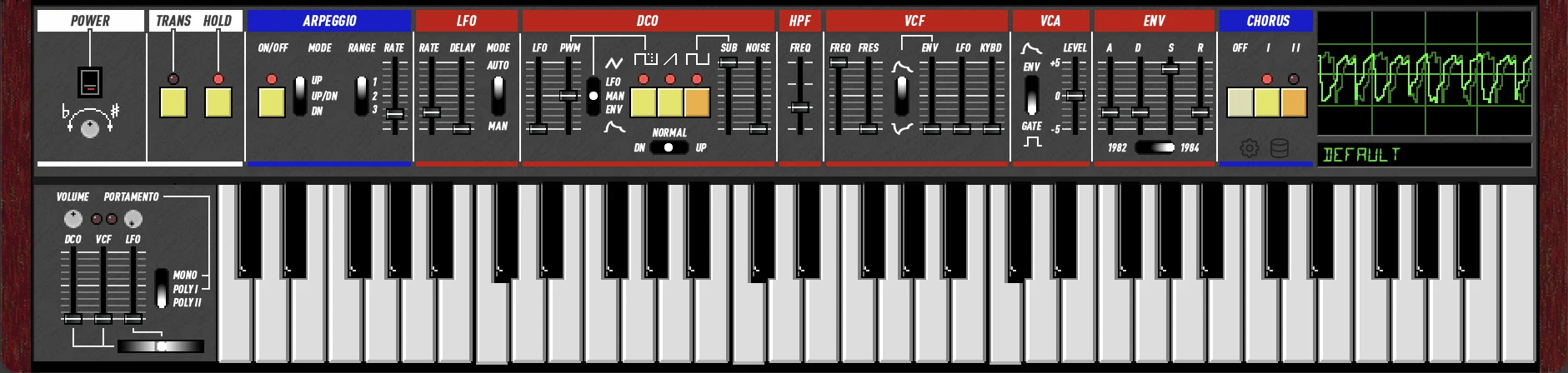
Ultramaster KR-106
Key Features
- Circuit-accurate Roland Juno modeling calibrated from hardware measurements, firmware analysis, and factory schematics
- Configurable 6, 8, or 10-voice polyphony with per-voice bandlimited wavetable DCO and sub-oscillator
- IR3109 VCF emulation with self-oscillation and 4x oversampled cascaded polyphase processing
- MN3009 BBD chorus with clock-domain modulation, 4-pole pre/post filters, and charge-well saturation modeling
- Two calibration modes: 1984 (firmware/schematics) and 1982 (analog CV/hardware measurements) for different tonal characters
- 128 factory patches decoded from original SYSEX data plus component variance simulation (Robot, Human, Out of Tune)
- Cross-platform with native Apple Silicon support, Linux including Raspberry Pi, and CLAP format alongside VST3, AU, and LV2
Description
Ultramaster KR-106 is a virtual analog synthesizer modeled after the Roland Juno polysynths, developed over 25 years by a two-person team that began the project in a Brooklyn loft in 2000. The DSP engine was calibrated from hardware measurements, firmware analysis, and factory schematics to recreate the original circuit behavior.
The synth offers configurable 6, 8, or 10-voice polyphony with a per-voice bandlimited wavetable DCO, sub-oscillator, IR3109 VCF with self-oscillation, and ADSR envelope. Shared modules include an LFO, high-pass filter, DAW-synced arpeggiator, and an MN3009 BBD chorus with clock-domain modulation.
Two distinct calibration modes are available: a 1984 mode based on firmware analysis and factory schematics, and a 1982 mode modeled from analog CV paths and hardware measurements. Component variance simulation adds per-voice tolerances through Robot, Human, and Out of Tune presets.
All 128 original factory patches ship decoded from SYSEX data, with 211 total explorable patches across dual Juno-60 and Juno-106 banks. A built-in oscilloscope provides waveform, ADSR, and frequency response visualization.
The plugin is open-source under GPL3 and runs on macOS (10.15+, Apple Silicon native), Windows 10+ (64-bit), and Linux (Ubuntu 20.04+, including Raspberry Pi arm64) in VST3, AU, CLAP, LV2, and standalone formats.
Video Preview

Frequently Asked Questions
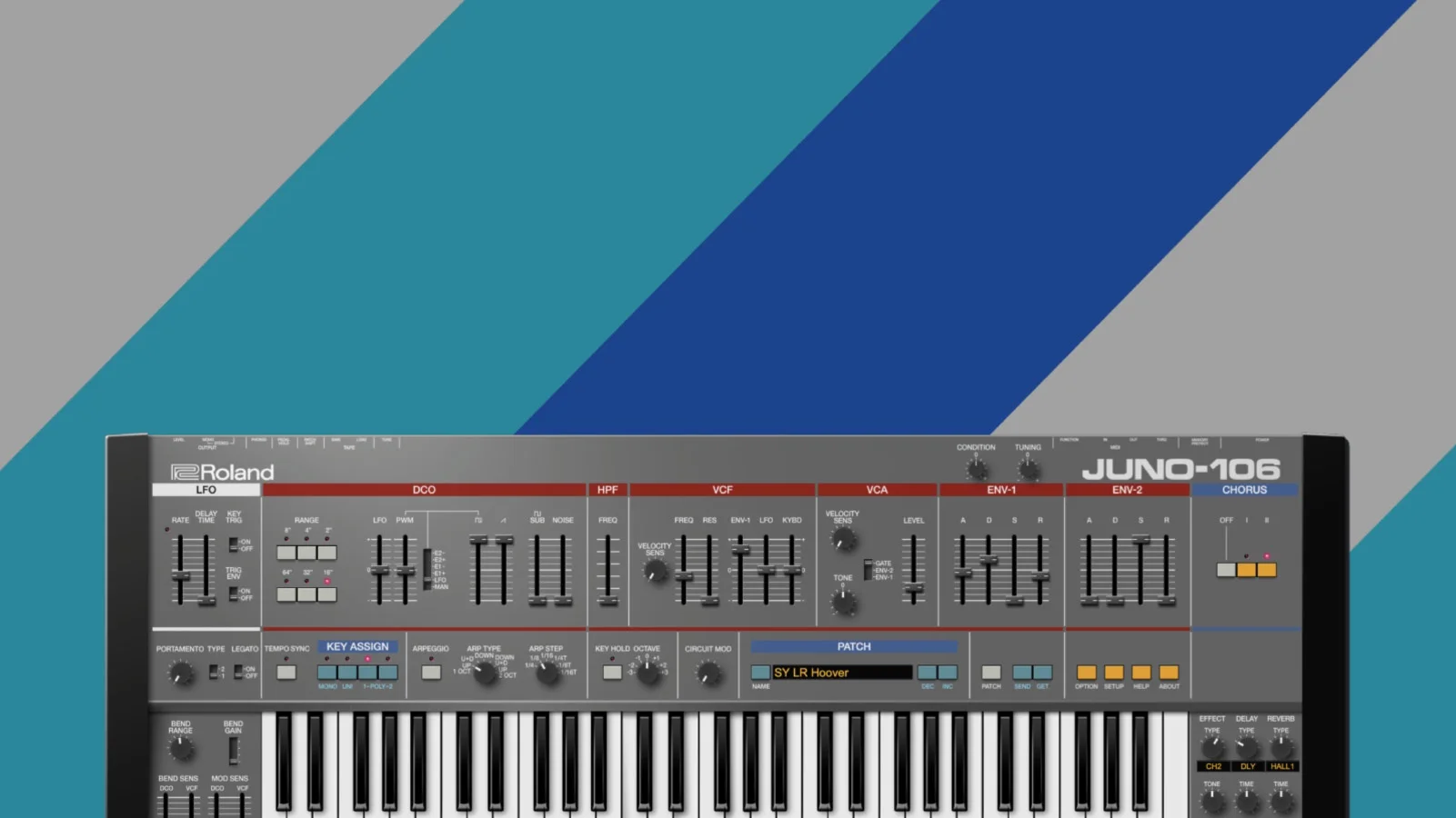
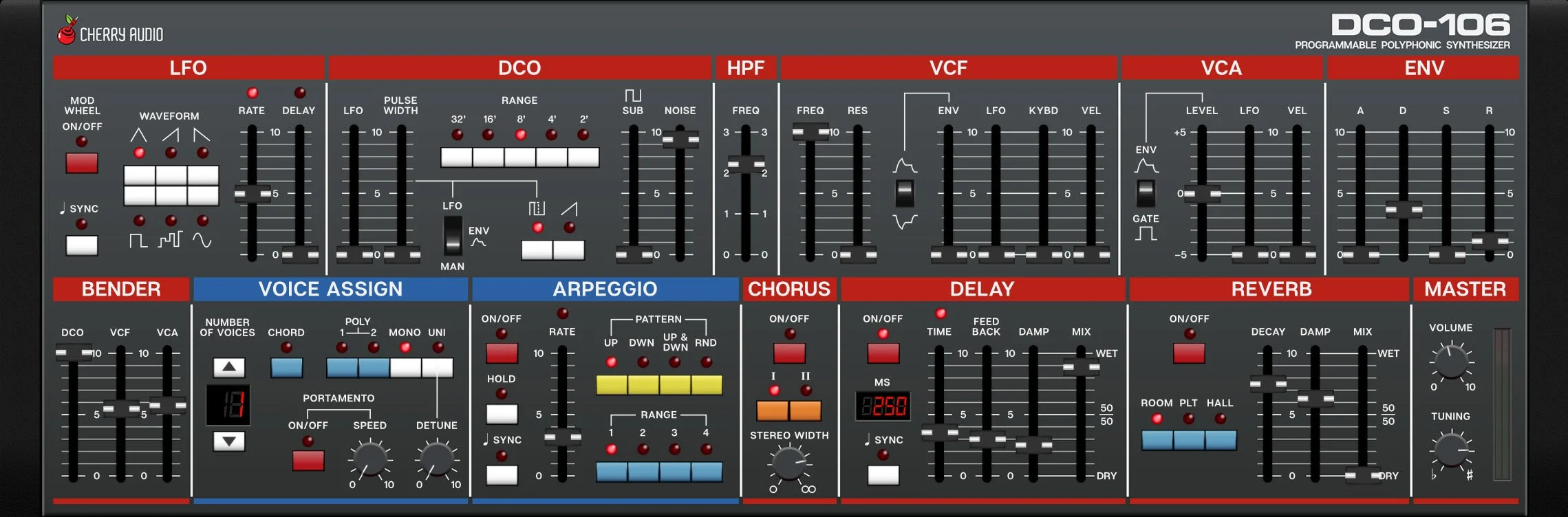
How does the KR-106 compare to Cherry Audio DCO-106 and Roland Cloud JUNO-106?
The KR-106 takes a different approach by modeling from hardware measurements and schematics rather than black-box emulation. Users in synth forums describe it as having more character and warmth compared to competitors. The trade-off is a more retro-looking interface and some reported aliasing in certain waveforms.
What are the 1982 and 1984 calibration modes?
The 1984 mode recreates the Juno-106 using firmware analysis and factory schematics for a digitally-accurate representation. The 1982 mode uses analog CV path measurements and hardware calibration for a warmer, more analog character. Each mode produces a subtly different tonal result.
Does KR-106 run on Linux and Raspberry Pi?
Yes. KR-106 supports Linux on x86_64 (Ubuntu 20.04+) and arm64 (Raspberry Pi OS). It is one of the few commercial-quality synth plugins that offers native Raspberry Pi builds, making it viable for embedded or headless music setups.
What does the component variance simulation do?
The Robot, Human, and Out of Tune presets adjust per-voice component tolerances to simulate how analog hardware ages and drifts. Robot mode keeps all voices perfectly in tune, Human adds subtle drift like a well-maintained unit, and Out of Tune recreates the characteristic instability of worn components.


