
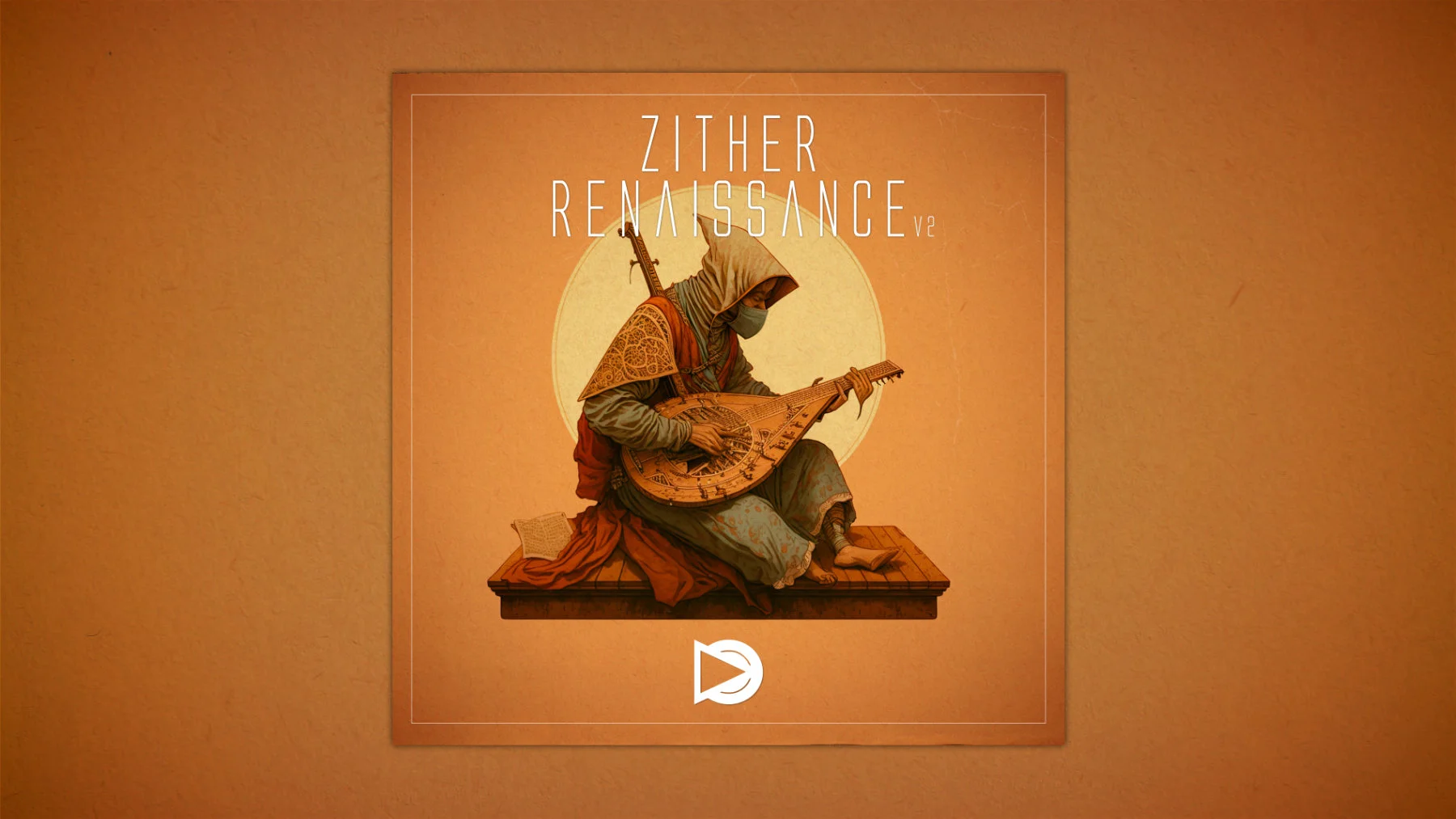
Zither Renaissance


Key Features
- Restored plucked-zither recordings use spectral repair, noise removal, and manual retuning to turn an imperfect source into a characterful playable instrument.
- One multi-sampled instrument keeps the workflow immediate when you need a single focused plucked-string color rather than a sprawling library.
- Distortion, delay, chorus, and reverb provide quick routes from a dry picked sound to a wider or more stylized texture.
- High-pass and low-pass filters, amplitude-range controls, and a multi-LFO support detailed tone and movement shaping inside the instrument.
- Polyphonic, monophonic, and legato voice modes adapt the same zither samples for chords, leads, and connected melodic phrases.
- The release also includes Decent Sampler and full-Kontakt editions for producers who prefer sampler-based workflows.
Description
Zither Renaissance is a SampleScience virtual instrument built from a restored recording of a plucked zither. Its repaired, retuned source gives it a direct, slightly unusual string tone that can remain recognizably acoustic while still cutting through a busy electronic or cinematic arrangement.
The main plugin presents one multi-sampled instrument with practical sound-shaping rather than a large collection of patches. Distortion, delay, chorus, reverb, high- and low-pass filtering, amplitude-range controls, and a multi-LFO make it possible to move from a dry picked line to a wider, more treated texture without leaving the instrument.
Three voice modes let the same sample set behave differently in a performance: use polyphony for chordal parts, monophony for a more focused lead, or legato when you want connected melodic movement. SampleScience also describes the plugin as low-CPU, which makes it a useful color layer when a session already has a lot of virtual instruments running.
The developer offers the same core zither sounds in the native plugin, Decent Sampler, and Kontakt versions. The native plugin is the most direct option for Windows and macOS DAW users, while the alternative formats make the source available for other sampler-based workflows; the full version of Kontakt is required for the Kontakt edition.
Video Preview

Frequently Asked Questions
What is Zither Renaissance based on?
It is built from a damaged recording of a plucked zither supplied by Versilian Studios. SampleScience says it repaired the source with spectral repair, adaptive noise removal, and manual retuning before turning it into the instrument.
Can I shape the zither sound inside the plugin?
Yes. The plugin includes distortion, delay, chorus, reverb, high- and low-pass filters, amplitude controls, and a multi-LFO. It also offers polyphonic, monophonic, and legato voice modes.
Which computers and plugin hosts does the native version support?
SampleScience lists Windows 8.1, 10, and 11 plus macOS 10.12 and later for the native plugin. It requires a 64-bit VSTi, VST3, or AUi host.
Do I need the full version of Kontakt for the Kontakt edition?
Yes. The developer states that the Kontakt edition requires the current full version of Kontakt 5 or Kontakt 6 and will not run in the free Kontakt Player. The Decent Sampler edition is a separate option.


