
NastyVCS
Key Features
- Opto-electric style compressor with multiple attack and release modes that handles everything from transparent glue to aggressive dynamics control
- Input and output audio transformer stages with continuously adjustable, volume-compensated saturation for adding analog warmth and punch
- Four-band musical EQ with low-boost, low-mid, high-mid, and air shelf sections plus switchable high-Q mode for steeper curves
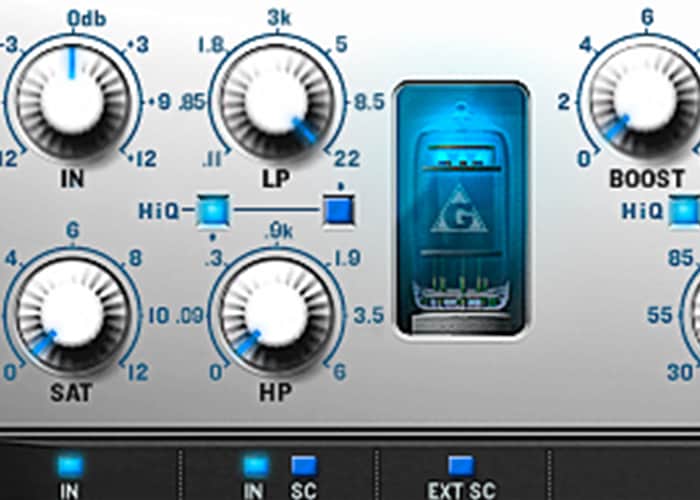
- Dual high-pass and low-pass filters routable to either the main audio path or the compressor sidechain, with external sidechain support
- Brickwall safety limiter in the output stage with fast and standard timing modes for managing peaks without a separate plugin
- Phase alignment tool with 90/180-degree shifting and polarity inversion for creative coloration and multi-mic phase correction
- Zero-latency operation across all processing stages, making it equally suited for tracking and mixing workflows
Description
NastyVCS mkII by Variety of Sound is a virtual console strip plugin that combines opto-electric compression, preamp saturation, four-band EQ, filtering, and brickwall limiting into a single zero-latency channel strip. Inspired by the dynamics and tone-shaping capabilities of high-end mixing consoles, it delivers musical coloration and transparent gain control across every stage of its signal path.
The mkII update introduced authentic audio transformer circuitry in both input and output stages, along with fully volume-compensated saturation and improved filter resolution. The compressor circuit has been redesigned to reduce unwanted distortion while preserving the smooth, program-dependent character that made the original a go-to mixing tool.
Three bands of parametric EQ sit alongside low-boost and air shelves tunable to 8k, 12k, or 17k, keeping the tonal palette musical rather than surgical. A switchable high-pass and low-pass filter pair can be routed into the sidechain, and the EQ section can be placed pre- or post-compression for flexible signal flow.
The built-in phase alignment tool with 90/180-degree shifting and polarity inversion adds a unique creative dimension, especially effective on multi-mic drum recordings where transient tuning yields audible improvements. Users consistently praise the compressor for working subtly without degrading the mix, and the saturation circuit for adding punch and warmth to everything from drums to vocals.
NastyVCS mkII requires a Windows PC with an SSE2-capable CPU and is available in both 32-bit and 64-bit builds as VST and VST3 plugins.
Video Preview


Frequently Asked Questions
Does NastyVCS mkII support VST3?
Yes. The mkII update released in May 2024 added VST3 support alongside the existing VST format. Both 32-bit and 64-bit versions are included in the download.
Can NastyVCS be used on every channel in a mix?
Yes, that is actually its intended use case. As a zero-latency channel strip, it is designed to sit on individual tracks rather than just buses. The developer recommends using it across multiple channels so the subtle saturation and compression effects accumulate for a more cohesive, vibrant mix.
How does the sidechain routing work in NastyVCS?
The high-pass and low-pass filters can be switched from the main audio path into the compressor sidechain using the SC button. You can also enable external sidechain input from channels 3 and 4, provided your DAW supports sidechain routing for the plugin.
What changed in the mkII version compared to the original NastyVCS?
The mkII version adds authentic audio transformer circuitry in both input and output stages, improved EQ and filter resolution with better Nyquist behavior, a redesigned compressor circuit with reduced distortion, fully volume-compensated saturation, VST3 support, and an online manual.


