
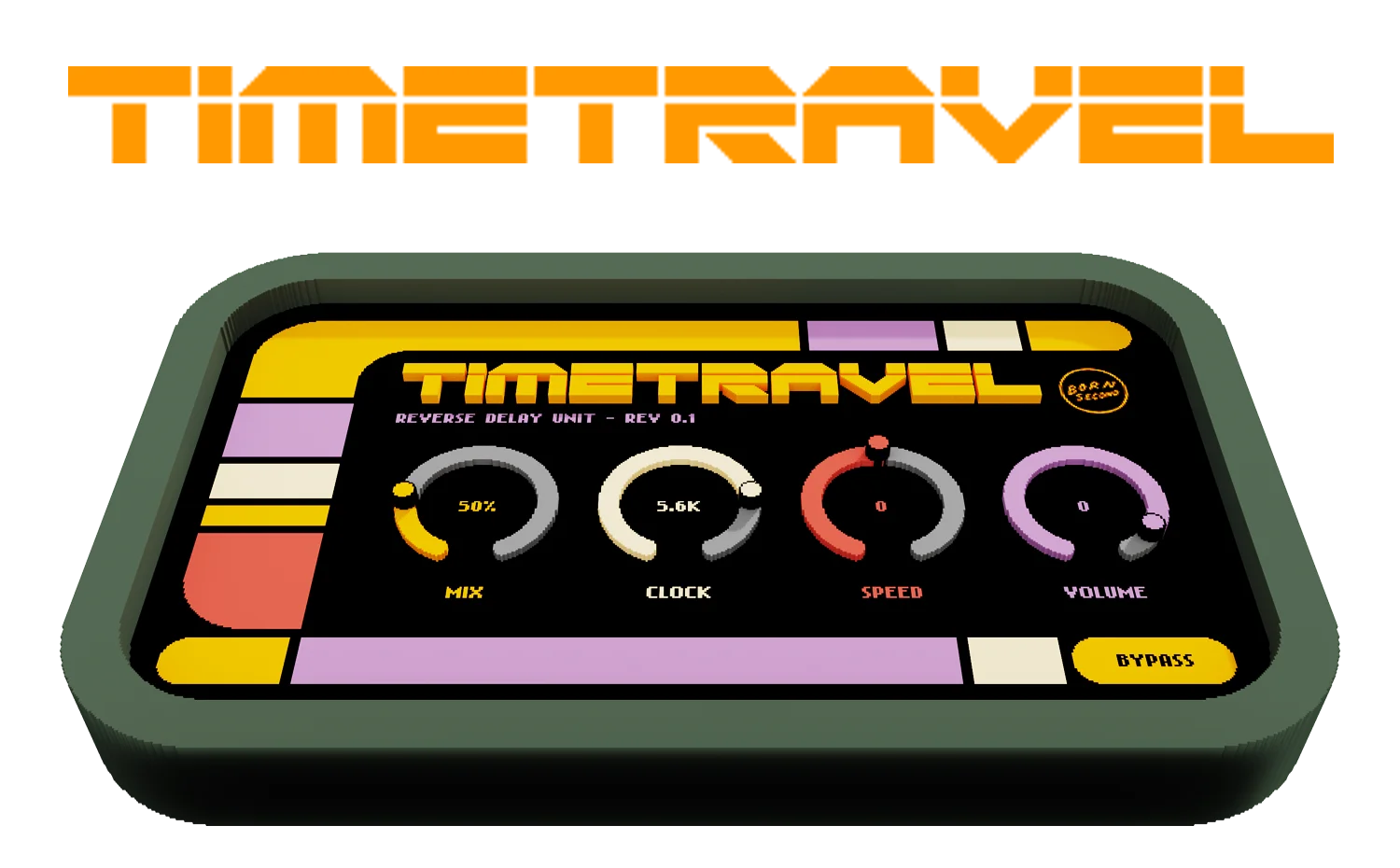
TimeTravel


Key Features
- Reverses captured audio using a measured model of a hardware delay pedal.
- Clock combines reverse-window length, converter rate and filtering in one control.
- Gliding clock changes create pitch smears when adjusted during playback.
- Varispeed shifts reversed audio up or down an octave in semitone steps.
- Equal-power mix blends the dry signal with the reversed sound.
- Soft clipping, hiss and clock wander add hardware-inspired coloration.
Description
TimeTravel is a reverse delay effect from Born Second that captures incoming audio and plays each segment backwards. Its sound draws on measurements of a classic pedal, combining a 10-bit converter with the constraints of fixed memory.
Clock changes the length and character of the reversed audio together: lower settings extend the window and darken the sound, while higher settings shorten it and produce a brighter result. Moving the control during playback glides between settings over roughly five seconds, creating a tape-like pitch smear.
Speed changes the playback rate of the reversed signal from one octave down to one octave up in semitone steps. Mix blends the original and reversed signals, while Volume sets the output level and Bypass passes the dry signal through.
The model retains deliberately imperfect details, including input soft clipping, a faint hiss, clock wander, and aliasing on bright sources. These characteristics make the effect useful for adding texture to synths, guitars, vocals, or transition effects when a clean digital repeat is not the goal.
The developer describes TimeTravel as free forever, and the download starts from its dedicated product page. The checkout uses a zero-dollar price and asks for an email address to deliver the software.
Frequently Asked Questions
What does the Clock control change?
Clock changes the converter rate, reverse window and filtering together. Lower settings yield a longer, darker window; higher settings produce a shorter, brighter one.
Can TimeTravel change the pitch of the reversed audio?
Yes. Speed changes playback rate from an octave down to an octave up in semitone steps, so pitch and playback speed move together.
Why does the effect sound gritty on bright sources?
The model includes a 10-bit converter and does not use input anti-aliasing. It also retains soft clipping, faint hiss and clock wander from the hardware-inspired design.
How do I obtain the download?
Open the developer's product page and follow Download Free to the checkout. The source reports that leaving the price at zero and entering an email address delivers the download without payment details.


