
Altar
Key Features
- Three-channel amp section with clean, modern high-gain, and Neural Amp Modeler loading modes
- Drag-and-drop modular DSP chain for reordering amp, cab, and effects modules
- Cab designer for creating and exporting custom impulse responses
- Built-in effects suite with overdrive modes, circuit-bending, reverb, chorus, ring modulation, forward delay, reverse delay, and glitch delay
- Two-octave real-time pitch shifting with semitone snapping and sub-octave layer blending
- Chug, Pick, whistle filter, pre/post processing, and lofi tools for shaping guitar tones in a mix
- Up to 8x oversampling plus utility tools including tuner, click, and output limiter
Description
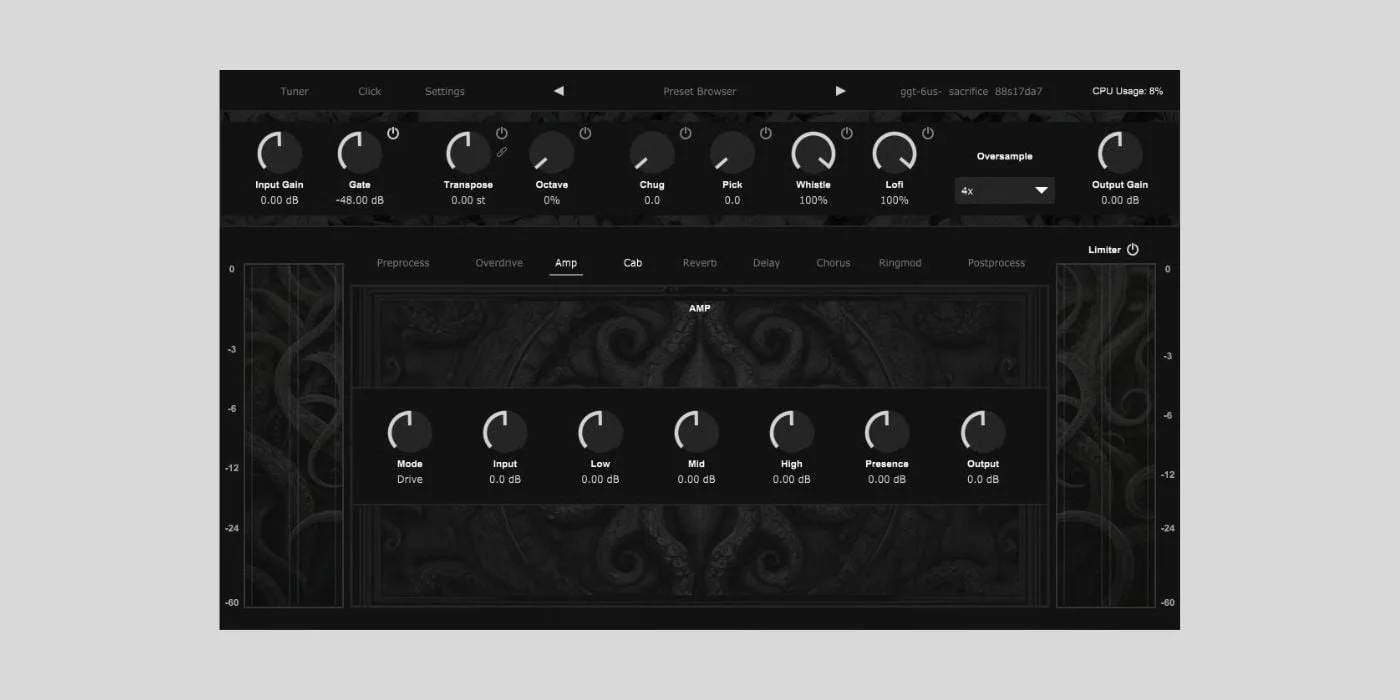
Altar is a modular guitar amp simulator from Lamprey built around a full amp, cab, and effects chain inside a Windows-first VST3 plugin. It covers glassy clean tones, modern high-gain sounds, and a third channel for loading Neural Amp Modeler files when you want to bring your own captures into the same workflow.
The main draw is the reorderable signal path: amp, cabinet, and effects modules can be dragged around, then bypassed from the same interface. That makes Altar feel closer to a compact guitar tone workstation than a single fixed amp head.
Its built-in cab designer lets you create impulse responses, while the effects suite adds overdrive modes, circuit-bending, reverb, chorus, ring modulation, forward delay, reverse delay, and glitch delay. Pitch shifting goes two octaves with semitone snapping and a sub-octave blend, so it can move from practical guitar tracking into heavier sound-design territory.
For mix shaping, Altar includes Chug for tightening low-frequency palm mutes, Pick for upper-mid attack, a whistle filter, pre/post processing strips, up to 8x oversampling, a tuner, click, and output limiter. It is still beta software, but the feature depth makes it especially interesting for guitarists who want a flexible all-in-one amp environment.
Video Preview

Frequently Asked Questions
Does Altar support Neural Amp Modeler files?
Yes. Altar includes a third amp channel that loads NAM files, so you can use external neural amp captures inside the same modular signal chain as its native clean and high-gain channels.
Can the modules be rearranged?
Yes. The amp, cab, and effects modules can be dragged into a different order, and modules can be bypassed from the chain. That routing flexibility is one of Altar's main advantages over simpler amp sims.
Is Altar finished software or still in beta?
Altar is still marked as beta by the developer. The public listings show active development through version 0.3, so expect a deep feature set but leave room for beta-stage changes and occasional rough edges.
What makes the cab designer useful?
The cab designer lets you build your own cabinet impulse responses instead of only loading fixed factory cabinets. That is useful for players who want to design, share, or reuse custom cab tones in other IR-compatible tools.


