
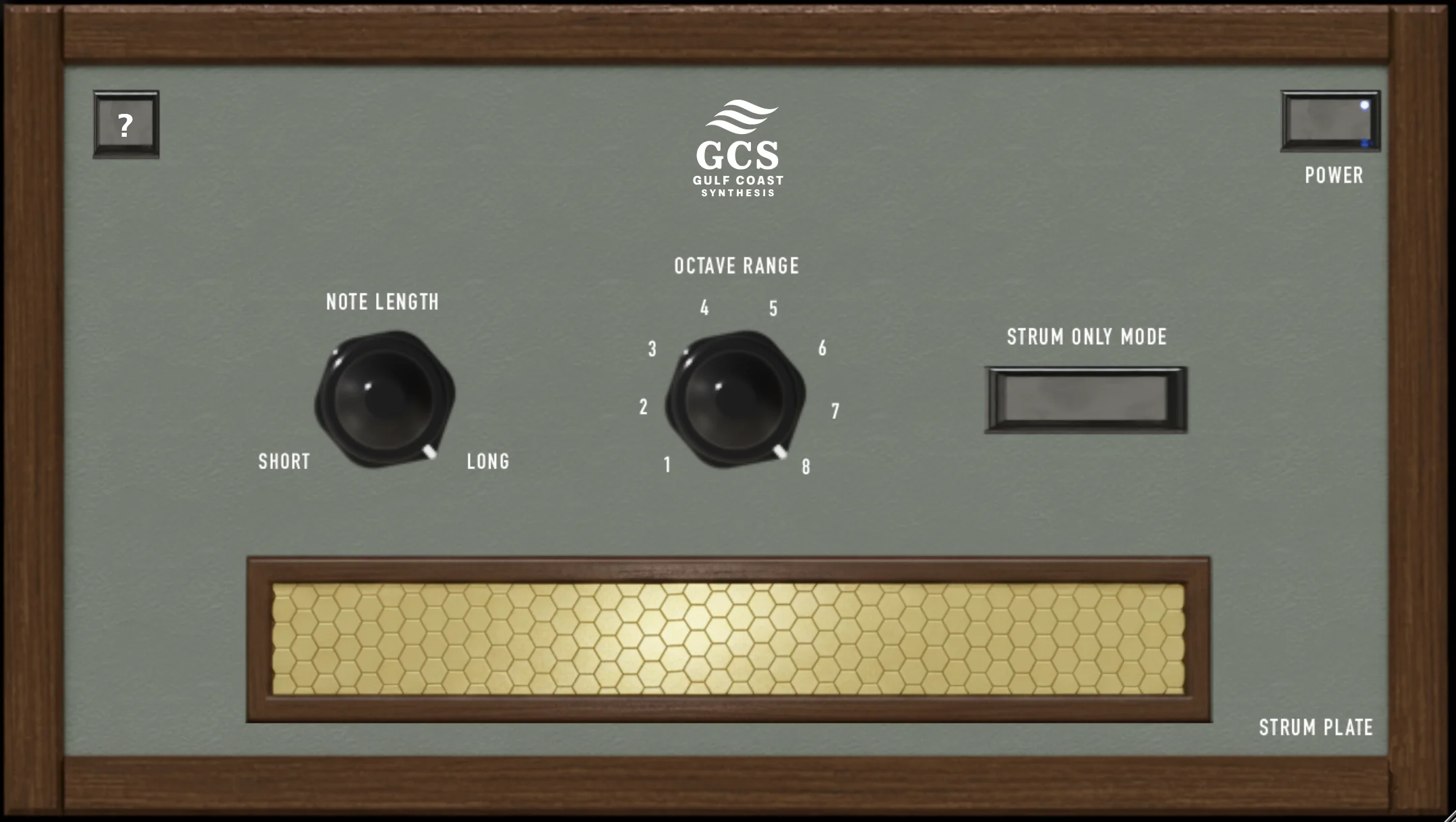
Strum Plate

Key Features
- Turns held MIDI chords into real-time strums using the mouse, trackpad, or pitch wheel
- Chord buffer separates note choice from rhythm so runs can be performed after the harmony is held
- Mod wheel control changes note length from short plucks to longer sustained gestures
- Octave range control can expand simple chords into wider harp-like sweeps and flurries
- MIDI-only design lets the same gestures drive synths, pianos, pads, strings, or other instruments
- Includes setup guidance for Pro Tools, Logic Pro, Ableton Live, and a Mac-only standalone routing workflow
Description
Strum Plate is a MIDI effect from Gulf Coast Synthesis that turns held chords into playable Omnichord-style strums. Instead of generating audio, it stores the notes you play in a buffer and triggers them when you swipe across its on-screen plate or move a pitch wheel.
The workflow is built for performance rather than fixed arpeggiator patterns: hold any chord, strum in either direction, then shape how broad or tight the resulting run feels. The mod wheel changes note length, while octave range can stretch simple triads into harp-like sweeps, fast flurries, or softer melodic gestures.
Because it outputs MIDI, Strum Plate depends on the instrument you route it into, so it can feel like a retro autoharp with a plucked synth, a cascading pad tool, or a cinematic run generator with keys and strings. The official page includes setup notes for Pro Tools, Logic Pro, Ableton Live, and a Mac-only standalone routing method for DAWs without MIDI FX support.
The main caveat is routing: comments and setup notes suggest Ableton and older hosts may require careful MIDI routing before the strums behave as expected. Once configured, it is best treated as a hands-on chord gesture tool for adding human timing and direction to parts that would otherwise be drawn into the piano roll.
Frequently Asked Questions
Does Strum Plate make its own sound?
No. Strum Plate generates MIDI, so it needs to be routed into a separate instrument before you hear anything. The final tone depends entirely on the synth, sampler, piano, strings, or other instrument receiving its MIDI output.
How is Strum Plate different from a normal arpeggiator?
A typical arpeggiator runs a repeating pattern once notes are held. Strum Plate is more performance-driven: it waits for your mouse or pitch-wheel gesture, then triggers the buffered chord notes in the direction and feel of that gesture.
Can it work in DAWs without normal MIDI FX routing?
The official page provides a Mac-only standalone workflow using an IAC virtual MIDI port for GarageBand and older DAWs. Hosts with proper MIDI FX routing should use the plugin format that fits the DAW, but setup differs by host.
What kinds of instruments pair well with it?
It is especially useful with sounds that benefit from note-by-note motion, such as plucked synths, soft keys, pads, strings, harps, and atmospheric instruments. Since it outputs MIDI, the same gesture can become retro, cinematic, or experimental depending on the sound source.


