
Obliterate
Key Features
- Over-the-top digital distortion designed for destructive sound design rather than transparent saturation
- Two destruction algorithms, Too Much and Too Most, for escalating levels of intensity
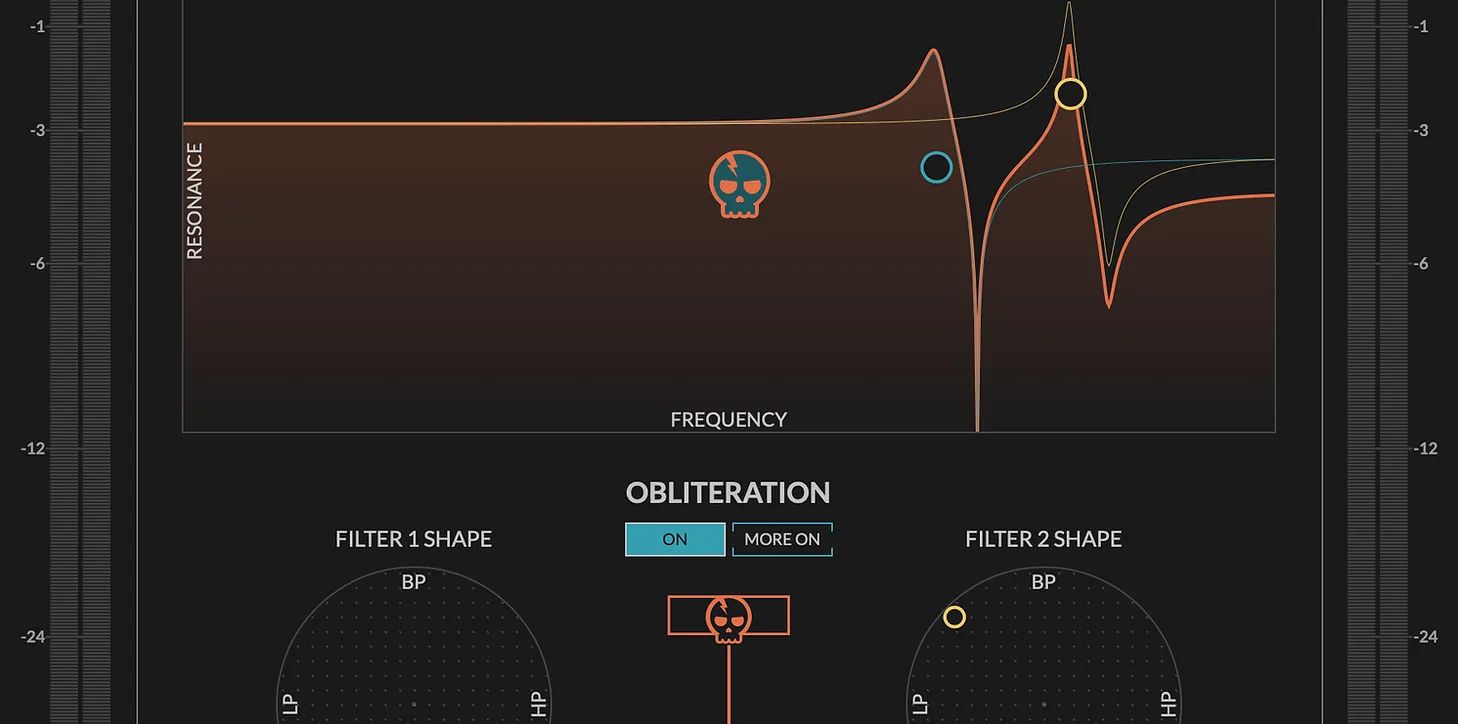
- Dual resonant multi-mode filters that morph between low-pass, high-pass, band-pass, all-pass, and notch shapes
- Click-and-drag control for moving multiple frequency and resonance parameters from one interface
- Built for distorted drums, aggressive bass movement, and horror or experimental effects
- Separate macOS and Windows installers with 64-bit AAX, VST, and VST3 support
Description
Obliterate is an extreme distortion filter from Newfangled Audio built for turning normal audio into harsh, animated, and unstable textures. It combines resonant filtering with aggressive digital destruction, so it works less like a polite saturation plugin and more like a controlled way to damage drums, bass, synths, and horror effects.
The plugin centers on two destruction algorithms, Too Much and Too Most, plus two resonant multi-mode filters that can morph through low-pass, high-pass, band-pass, all-pass, and notch behavior. A click-and-drag control lets you move frequency and resonance settings together, which makes the plugin fast for performance-style sweeps and chaotic transitions.
Obliterate is strongest when subtlety is not the goal. Blend it in for crunchy drum parallel processing, automate it for bass risers, or push it into noisy sound-design territory when a clean source needs to feel broken, angry, or unstable.
The tradeoff is control: this is not a surgical distortion suite with detailed multiband routing or dozens of analog models. Producers who want broad, destructive character in a simple interface will get more from it than users looking for transparent saturation or mastering polish.
Video Preview

Frequently Asked Questions
Is Obliterate meant for subtle saturation?
Not really. Newfangled Audio positions Obliterate as an absurd, over-the-top distortion filter, so it is better for obvious destruction, glitch, and sound-design moves than gentle analog warming.
What do the Too Much and Too Most modes do?
They are Obliterate's two destruction algorithms. The official page presents them as escalating distortion modes, with Too Most being the more extreme option.
Can Obliterate work as a filter effect as well as a distortion?
Yes. It started from a filter algorithm and still includes two resonant multi-mode filters, but the bug-derived distortion is central to the sound.
What sources suit Obliterate best?
The developer highlights synth drums, general drum loops, bass, and horror effects. Those sources benefit from broad tonal destruction and animated resonant movement.


